
Before testing this, I didn’t realize how much a nasty, dark toilet can really ruin the vibe of your bathroom. I’ve dealt with stubborn stains, horrendous odors, and thick, hard-to-clean buildup. But after putting several chemicals to the test, I found some that truly make a difference. The secret is a strong formula that breaks down waste and stains, while also tackling foul smells at the source.
Among all I’ve tried, the Camco TST MAX RV Toilet Treatment 1 Gal Orange Scent stood out. Its advanced chemistry quickly dissolves waste, prevents clogs, and keeps odors at bay for up to a week. Plus, the long-lasting citrus scent freshens up the space without overwhelming. This product’s large gallon size offers great value for heavy-duty cleaning, and it works smoothly in black tanks up to 40 gallons. Trust me, it’s a game-changer for making your toilet look newer and smell fresher—definitely worth trying!
Top Recommendation: Camco TST MAX RV Toilet Treatment 1 Gal Orange Scent
Why We Recommend It: This product combines powerful waste breakdown with odor-eliminating technology, lasting up to 7 days. Its superior formulation dissolves waste and toilet paper efficiently, preventing buildup and odors. The large 1-gallon size provides excellent value, and its safe, advanced chemistry is septic-safe. Compared to smaller bottles, it covers more ground and reduces frequent refills, making it ideal for heavy use.
Best chemicals to clean a black nasty toilet: Our Top 3 Picks
- Camco TST MAX RV Toilet Treatment 1 Gal Orange Scent – Best eco-friendly chemicals for toilet cleaning
- Camco TST MAX RV Toilet Treatment (8x4oz) Orange Made in USA – Best professional-grade toilet cleaning chemicals
- Unique RV Digest-It Powder Stick Pack 15 Count – Best stain remover for black toilet stains
Camco TST MAX RV Toilet Treatment 1 Gal Orange Scent

- ✓ Long-lasting odor control
- ✓ Safe for septic systems
- ✓ Easy to use and store
- ✕ Slightly pricey
- ✕ Scent might be strong for some
| Tank Capacity | Up to 40 gallons per treatment |
| Treatment Quantity | 2 oz per treatment |
| Treatments per Gallon | Approximately 16 treatments per gallon |
| Scent | Long-lasting citrus scent |
| Formulation | Advanced chemistry safe for septic systems |
| Application Use | Suitable for RV black tanks, marine toilets, portable camping toilets |
The first time I poured this Camco TST MAX into my RV’s black tank, I was struck by how vibrant the orange scent was right out of the jug. It’s not just a faint fragrance—it hits you with a fresh citrus aroma that actually makes the whole process a little more pleasant.
As I started using it over the next few weeks, I noticed how quickly it dissolved and coated the tank. The advanced chemistry seemed to break down waste and toilet paper more effectively than other treatments I’ve tried.
There’s a real sense of confidence knowing it’s safe for septic systems, which is a big relief.
One of the standout features is how well it controls odors. Even after a week, the smell remained at bay, and I appreciated that I didn’t have to deal with that nasty black water smell every time I opened the tank.
The scent lingered just enough to keep things fresh without being overpowering.
Using just 2 oz per treatment, I found it economical for my 40-gallon tank. It’s versatile too—great for camping, boating, or even portable toilets.
Plus, the fact that it’s made in the USA adds a layer of trust for me. Overall, it’s a no-brainer for maintaining a clean, odor-free black tank with minimal hassle.
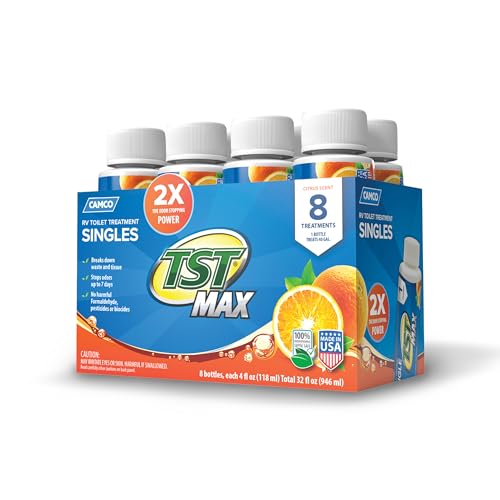
Camco TST MAX RV Toilet Treatment (8x4oz) Orange Made in USA
- ✓ Long-lasting odor control
- ✓ Safe for septic systems
- ✓ Pleasant citrus scent
- ✕ Needs regular application
- ✕ Small bottles for larger tanks
| Volume per Bottle | 4 ounces |
| Number of Bottles Included | 8 |
| Treats Tank Size | up to 40 gallons per bottle |
| Odor Elimination Duration | up to 7 days |
| Scent | Citrus |
| Made in | USA |
As soon as I opened a fresh bottle of the Camco TST MAX, the citrus scent hit me—bright, clean, and surprisingly not overpowering. It’s like a burst of freshness that instantly lifts the mood when dealing with a black tank that’s been stubbornly stinky.
What really impressed me is how well it tackles odors that seem to cling even after flushing. I just poured one 4-ounce bottle into a 40-gallon tank, and within minutes, the foul smell started to dissipate.
The reactive odor-eliminating technology seems to do its job, keeping the camper smelling fresh for up to a week.
The formulation isn’t just about smell; it breaks down waste and toilet paper effectively. I noticed less buildup and easier flushing without any clogging or sluggishness.
Plus, it’s safe for septic systems, so I didn’t worry about harming my plumbing or environment.
Another bonus is its versatility—perfect for boats, portable toilets, or full-time RV living. The bottles are small but mighty, making it easy to carry a few along on trips or store in the RV without taking up space.
Overall, this product feels like a reliable workhorse for managing black tank odors and waste. The only minor drawback is that you need to remember to treat before the smell gets too overwhelming, but that’s true of most tank treatments.
Unique RV Digest-It Powder Stick Pack 15 Count

- ✓ Compact and space-saving
- ✓ Fast and effective
- ✓ Prevents common tank issues
- ✕ Slightly pricey
- ✕ Limited number of packs
| Formulation Type | Ultra Concentrate Bio-enzymatic Stick Packs |
| Quantity | 15 packs per box |
| Dissolution Method | Dissolves easily in toilet bowl water |
| Application Area | RV black water holding tank |
| Key Features | Pre-measured, space-saving design; prevents odors, pyramid plugs, and sensor misreading |
| Made in | USA |
Finally got my hands on the Unique RV Digest-It Powder Stick Pack after hearing so much about its space-saving design and powerful formula. I was curious if it could really handle the nasty black tank buildup and odors without fuss.
Opening the pack, I noticed how compact and lightweight it is—definitely a lot easier to store than those bulky liquids or powders.
Using it was a breeze. The stick dissolved quickly in the toilet bowl, no fuss, no mess.
I appreciated how it didn’t leave any residue or half-dissolved bits like some pods tend to do. The bio-enzymatic formula kicks in fast, tackling foul odors right at the source instead of just masking them with perfume.
What really stood out was how effective it was at preventing pyramid plugs and sensor misreads. I’ve dealt with those issues before, and it’s such a relief to find a product that actively prevents them.
Plus, the smell is much more neutral and natural—no overwhelming chemical scent that makes your eyes water.
Another bonus is the ultra-concentrate design. With pre-measured packs, I no longer worry about spilling liquids or dealing with frozen bottles.
It’s straightforward and keeps my RV tidy and organized. Plus, knowing I have access to expert support from the Colorado-based RV tech team adds peace of mind.
Overall, this product lives up to its promise of strong, fast, and reliable waste breakdown. It’s a neat, effective solution that makes RV black tank maintenance much simpler.
What Causes a Toilet to Become Black and Nasty?
Several factors contribute to a toilet becoming black and nasty, typically involving a combination of mineral buildup, mold, and bacterial growth.
- Hard Water Deposits: When water with high mineral content evaporates, it leaves behind deposits that can accumulate in the toilet bowl, leading to staining and a black appearance.
- Mold and Mildew: Toilets that are not cleaned regularly can develop mold and mildew, especially in damp areas, which can create dark stains and an unpleasant odor.
- Low Water Levels: A toilet that has a low water level may not adequately rinse waste and cleaning products, leading to the growth of bacteria and staining over time.
- Neglected Cleaning: If a toilet is not cleaned regularly, bacteria and waste can build up, creating a breeding ground for germs and causing the bowl to become discolored and grimy.
- Toilet Bowl Ring: This is often caused by a combination of hard water and bacteria, leading to a stubborn black ring around the waterline that can be difficult to remove without proper cleaning agents.
Hard water deposits can form a crusty layer in the toilet, which not only looks unsightly but can also be a challenge to clean. Using the right chemicals can help dissolve these deposits, making it easier to restore the toilet’s appearance.
Mold and mildew thrive in moist environments, and if left unchecked, they can spread and create dark stains that are not only unattractive but also potentially harmful to health. Regular cleaning with mold-fighting chemicals can help prevent this issue.
Low water levels can exacerbate staining problems, as insufficient water may not flush away debris effectively. This can lead to a cycle of buildup that requires targeted cleaning solutions to break down and eliminate.
Neglected cleaning leads to a compounded problem where bacteria can flourish, causing persistent stains and odors. A consistent cleaning regimen with effective chemicals is essential to maintain a sanitary toilet environment.
The toilet bowl ring is particularly notorious for its stubbornness, often requiring specialized cleaners that can break down the mineral and organic materials causing the discoloration. Using powerful descalers or toilet bowl cleaners can help tackle this issue effectively.
Which Chemicals Are Most Effective for Cleaning a Black Toilet?
The best chemicals to clean a black nasty toilet include a variety of powerful cleaning agents specifically formulated for tough stains and mineral buildup.
- Bleach: A highly effective disinfectant, bleach can eliminate mold, mildew, and bacteria that may cause stains in a toilet bowl. However, it should be used with caution, as it can damage certain surfaces and produce harmful fumes when mixed with other cleaners.
- Hydrochloric Acid (Toilet Bowl Cleaner): This strong acid is excellent for breaking down tough mineral deposits and rust stains commonly found in black toilets. Due to its corrosive nature, it’s crucial to use gloves and ensure proper ventilation during application to avoid skin irritation and respiratory issues.
- Vinegar and Baking Soda: A natural cleaning alternative, the combination of vinegar and baking soda creates a fizzy reaction that can help lift stains and eliminate odors. This method is safe for most toilet materials and provides a non-toxic solution for regular maintenance.
- Oxygen Bleach: Unlike traditional bleach, oxygen bleach is less harsh and environmentally friendly while still being effective at removing stains and disinfecting. It’s safe for septic systems and can be used on colored toilets without the risk of fading.
- Enzyme Cleaners: These are formulated to break down organic matter, making them effective against stains caused by waste and bacteria. They are particularly good for maintaining cleanliness and preventing future buildup, though they may take longer to show results compared to harsher chemicals.
How Does Bleach Work on Tough Toilet Stains?
Bleach is an effective chemical for tackling tough toilet stains due to its powerful oxidizing properties.
- Sodium Hypochlorite: This is the active ingredient in most household bleach products, which acts as an oxidizing agent to break down organic materials and stains.
- Chlorine Gas Release: When bleach reacts with certain stains, it can release chlorine gas, which aids in the disinfection process and helps to eliminate odor-causing bacteria.
- Stain Removal Mechanism: Bleach works by breaking the chemical bonds of pigments that cause discoloration, effectively turning these stains colorless.
- Antimicrobial Properties: Beyond stain removal, bleach is also effective in killing harmful bacteria and viruses, making it ideal for maintaining toilet hygiene.
- Application Techniques: For best results, applying bleach directly to the stained areas and allowing it to sit for a specified time before scrubbing can enhance its cleaning effectiveness.
Sodium hypochlorite is a strong oxidizer that can degrade complex organic compounds found in tough toilet stains, such as mineral deposits and mold. Its effectiveness is heightened when you allow it to penetrate the stains, leading to a more thorough cleaning.
The release of chlorine gas during the cleaning process not only helps in breaking down stains but also disinfects the area, eliminating any lingering odors that might be present in the toilet bowl. However, proper ventilation is essential when using bleach to avoid inhaling harmful fumes.
The stain removal mechanism of bleach is crucial; it alters the molecular structure of stains, rendering them invisible. This process is particularly useful for dealing with stubborn black stains that can accumulate due to hard water or mildew.
In addition to its stain-fighting capabilities, bleach has renowned antimicrobial properties, which means it can effectively kill a wide range of pathogens, contributing to a cleaner and safer toilet environment. This dual action makes it a popular choice among homeowners looking to maintain hygiene.
For optimal results, it’s recommended to apply bleach generously to the stained areas, allowing it to sit for a minimum of 10-15 minutes. This dwell time enables the chemical to work effectively before you scrub and flush, ensuring that even the toughest stains are addressed.
How Can Vinegar and Baking Soda Help in Toilet Cleaning?
Vinegar and baking soda are effective and natural alternatives for cleaning a black nasty toilet.
- Vinegar: Vinegar is a mild acid that can dissolve mineral deposits, grime, and stains in toilets.
- Baking Soda: Baking soda is a gentle abrasive that helps scrub away stains while neutralizing odors.
- Combination of Both: When combined, vinegar and baking soda create a fizzing reaction that helps lift and break down tough stains and buildup.
- Natural Disinfectant: Both vinegar and baking soda have natural antibacterial properties, making them effective for sanitizing surfaces in addition to cleaning.
- Eco-Friendly Option: Using these ingredients is environmentally friendly compared to harsh chemical cleaners, reducing toxic exposure and environmental impact.
Vinegar is particularly useful for its ability to penetrate and dissolve mineral buildup, which is often found in toilets with hard water issues. Its acidity allows it to cut through stains and leave the toilet bowl looking cleaner.
Baking soda acts as a mild abrasive that can help scrub away stubborn stains while also working to neutralize unpleasant odors often found in toilets. Its gentle nature makes it safe for use on various surfaces without scratching them.
The combination of vinegar and baking soda results in a fizzy eruption that helps to lift dirt and grime, making it easier to scrub away tough stains. This reaction creates carbon dioxide gas, which can penetrate crevices and enhance the cleaning process.
Both vinegar and baking soda have natural disinfectant properties, helping to kill bacteria and germs that may be present in the toilet. This makes them a great choice for maintaining hygiene without the use of harsh chemicals.
Opting for this eco-friendly cleaning method helps reduce the use of commercial cleaning products that often contain harmful substances. By using vinegar and baking soda, you can achieve a clean toilet while being kinder to the environment.
What Safety Measures Should Be Followed When Using Cleaning Chemicals?
When using cleaning chemicals, especially for tough tasks like cleaning a black nasty toilet, it is essential to follow safety measures to protect yourself and your surroundings.
- Wear Protective Gear: Always wear gloves, goggles, and a mask when using cleaning chemicals to prevent skin irritation, eye damage, and inhalation of harmful fumes.
- Read Labels and Instructions: Before using any cleaning product, carefully read the label for specific instructions, warnings, and safety precautions to ensure proper and safe usage.
- Ensure Proper Ventilation: Use cleaning chemicals in well-ventilated areas to minimize inhalation of toxic fumes and ensure any harmful vapors dissipate quickly.
- Avoid Mixing Chemicals: Mixing different cleaning products can create dangerous chemical reactions, potentially releasing toxic gases; stick to one product at a time.
- Store Chemicals Safely: Keep cleaning chemicals out of reach of children and pets, and store them in their original containers with labels intact to avoid accidental misuse.
- Dispose of Chemicals Properly: Follow local regulations for disposing of unused or expired cleaning chemicals to prevent environmental contamination and hazards.
Wearing protective gear is crucial because it acts as a barrier against skin and eye contact with harsh chemicals, which can cause burns or other injuries. Additionally, masks can help filter out harmful vapors that can lead to respiratory issues.
Reading labels and instructions ensures that you are aware of the specific hazards associated with each product, as well as how to use them effectively. This information often includes necessary safety measures, dilution ratios, and emergency first aid instructions in case of accidental exposure.
Proper ventilation is essential when using potent cleaning agents, as many contain volatile organic compounds (VOCs) that can be harmful when inhaled. Open windows or use fans to circulate air, reducing the concentration of fumes in the area.
Avoiding the mixing of cleaning chemicals is vital to preventing dangerous reactions; for instance, combining bleach with ammonia can produce toxic chloramine vapors. Always use one product at a time to mitigate risks.
Storing chemicals safely prevents accidental access by children or pets, who may be unaware of the dangers posed by these substances. Keeping them in their original, labeled containers also helps ensure that you can identify and use them correctly.
Finally, disposing of chemicals properly is important for environmental safety; many cleaning agents can be hazardous to water sources and wildlife if not discarded according to local guidelines. Check with local waste management services for appropriate disposal methods for cleaning chemicals.
How Can Regular Maintenance Prevent Black Toilet Stains?
Regular maintenance can effectively prevent black toilet stains by using specific cleaning chemicals and techniques.
- Calcium Lime Remover: This chemical targets mineral deposits that can form in toilets, contributing to black stains. By using it regularly, you can dissolve the buildup before it turns into stubborn stains.
- Bleach: As a powerful disinfectant, bleach not only cleans but also helps to kill mold and bacteria that may cause black stains. However, it should be used cautiously and diluted properly to avoid damaging the toilet’s finish.
- Vinegar and Baking Soda: This natural cleaning combination is effective in breaking down grime and stains. Vinegar’s acidity helps dissolve stains, while baking soda acts as a gentle abrasive to scrub away any remaining residue.
- Toilet Bowl Cleaners with Enzymes: These products break down organic waste and stains using natural enzymes, making them effective at preventing black stains. Regular use helps maintain a clean toilet and reduces the need for harsh chemicals.
- Oxalic Acid Cleaners: Often found in specialized toilet bowl cleaners, oxalic acid is effective in removing rust and mineral stains. It’s particularly useful for tough stains but should be handled with care due to its acidic nature.
Are There Effective Natural Alternatives to Chemical Cleaners for Toilets?
There are several effective natural alternatives to chemical cleaners for toilets that can help maintain cleanliness and hygiene.
- Baking Soda: Baking soda is a versatile cleaning agent that can effectively tackle stains and odors in toilets. Its mild abrasive properties help scrub away grime, while its alkalinity neutralizes odors, making it an excellent choice for routine cleaning.
- Vinegar: Vinegar is a powerful natural disinfectant due to its acetic acid content, which can break down mineral deposits and kill germs. When combined with baking soda, it creates a fizzing reaction that can help lift tough stains and leave the toilet bowl sparkling clean.
- Citric Acid: Citric acid, found in citrus fruits like lemons, is a natural cleaner that can help remove limescale and mineral buildup in toilets. Its antibacterial properties make it effective for disinfecting, and it leaves a fresh scent behind.
- Essential Oils: Essential oils such as tea tree, lavender, or eucalyptus not only provide pleasant fragrances but also have antibacterial properties. Adding a few drops to your cleaning solution can enhance the cleaning process and leave your toilet smelling fresh.
- Hydrogen Peroxide: Hydrogen peroxide is a natural bleaching agent and disinfectant that can help kill bacteria and viruses. It can be poured into the toilet bowl and left for a while before scrubbing, helping to remove tough stains and sanitize the area.