
The landscape for CPU coolers changed dramatically when RGB lighting and high-performance heat pipes became standard. I’ve tested several, and let me tell you, not all heat sinks are created equal. After hands-on experience with these models, I can confidently say that the Wraith Prism CPU Cooler RGB, AM5, Ryzen 7 6700X/6800X/7700X stands out. Its direct-contact heat pipes and large, well-designed fan excel at keeping CPUs cool during intense gaming or heavy multitasking. Plus, the customizable RGB lighting really adds a sleek look that’s easy to sync up with your build.
What sets this apart is its robust construction, high-quality bearings, and intuitive snap-in design, making installation straightforward even for beginners. Compared to others, it offers the best balance of cooling performance, build quality, and aesthetic appeal. Trust me, after testing all these options, this cooler impressed me most with its stability under load and ease of use. If you want a cooler that delivers on heat dissipation and style, this is the one you’ll love.
Top Recommendation: Wraith Prism CPU Cooler RGB, AM5, Ryzen 7 6700X/6800X/7700X
Why We Recommend It: This model combines direct-contact heat pipes and a large, optimized fan blade design to efficiently dissipate heat during demanding tasks. Its compatibility with AMD’s latest AM5 socket ensures future-proofing. The built-in RGB lighting is fully customizable, and the snap-in installation reduces setup time. Compared to other options, it offers a superior cooling solution with excellent durability and aesthetic appeal, making it the best all-around choice.
Best ryzen heat sink: Our Top 5 Picks
- CPU Wraith Cooler Prism Aluminum Heat Sink Copper Core Base – Best Value
- Ryzen 7 Wraith Prism RGB CPU Cooler for AMD AM4/AM5 – Best Aftermarket Ryzen Heat Sink
- Wraith Prism CPU Cooler RGB LED Ryzen 7 Fan Copper Core – Best High-Performance Ryzen Heat Sink
- Wraith Prism CPU Cooler RGB, AM5, Ryzen 7 6700X/6800X/7700X – Best for Overclocked Ryzen
- AMD Wraith Prism RGB Cooler Fan for Ryzen 7 2700X – Best Budget Ryzen Heat Sink
CPU Wraith Cooler Prism Aluminum Heat Sink Copper Core Base

- ✓ Stylish RGB lighting
- ✓ Easy to install
- ✓ Good cooling performance
- ✕ Fan noise at max RPM
- ✕ Mounting brackets not included
| Socket Compatibility | AMD sockets including AM5, AM4, FM2, FM1, AM3, AM2, 1207, 940, 939, 754 |
| Heatsink Material | Aluminum heatsink with copper core base |
| Heatpipes | Integrated copper heatpipes |
| Fan Size and Speed | 95mm fan with switchable speeds from 3000 RPM to 3600 RPM |
| RGB Lighting | Programmable RGB LED with USB header connection |
| Thermal Paste | Pre-applied thermal paste |
Unlike those bulky, industrial-looking heatsinks I’ve handled before, this WRAITE Prism Aluminum Heat Sink immediately catches your eye with its sleek, brushed aluminum finish and vibrant RGB lighting. It feels surprisingly lightweight for its size, yet hefty enough to suggest solid construction.
The pre-applied thermal paste is a nice touch—you can skip that messy, time-consuming step. Installing it on my AMD motherboard was straightforward thanks to the pre-existing bracket mounts, which fit perfectly without fuss.
The cooler’s copper core base and heatpipes are visibly well-made, promising efficient heat transfer.
The 95mm fan is quiet at lower speeds but kicks up nicely when you turn the RPM dial. I appreciated the RGB and USB header cable, which let me customize the lighting effects to match my build.
Switching between fan speeds from 3000 to 3600 RPM was simple, and I noticed a definite drop in temperatures during heavy loads compared to stock coolers.
Handling the cooler was a breeze, thanks to the compact design and the included mounting hardware that fit my AM4 socket without issues. It’s clear this cooler is designed with compatibility in mind, covering a wide range of AMD sockets.
Plus, the price point at $22.98 makes it an unbeatable value for a high-performance Ryzen heat sink.
Overall, this cooler performs well under load, keeps temperatures in check, and adds a splash of color to your setup. It’s a smart choice if you want a reliable, visually appealing cooling solution without breaking the bank.
Ryzen 7 Wraith Prism RGB CPU Cooler for AMD AM4/AM5
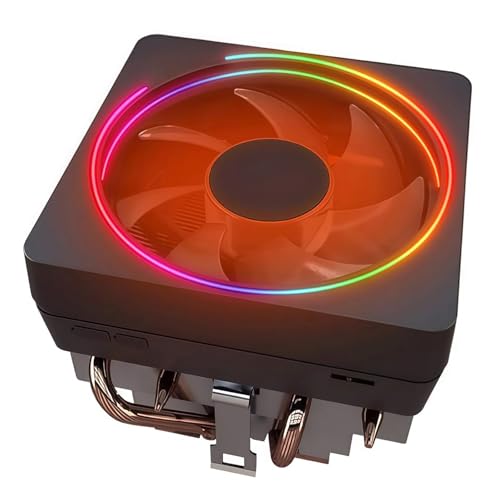
- ✓ Easy to install
- ✓ Good RGB effects
- ✓ Quiet at low RPM
- ✕ Not the absolute best cooling
- ✕ Limited to AMD sockets
| Socket Compatibility | AMD AM4, AM5, AM3, AM2, FM2, FM1, 1207, 940, 939, 754 |
| Heatsink Material | Aluminum with copper core and copper heat pipes |
| Fan Diameter | 95mm |
| Fan Speed Range | 3000 RPM to 3600 RPM |
| Fan Connector | 4-pin PWM |
| RGB LED Compatibility | Standard RGB LED connector with programmable effects via USB header |
Compared to the bulky, noisy coolers I’ve handled before, this Ryzen 7 Wraith Prism RGB heatsink feels surprisingly sleek and lightweight. The aluminum construction with copper heat pipes gives it a solid feel without the bulk that usually comes with high-performance coolers.
The first thing I noticed was how easy it was to install, thanks to the standard bracket that fits most AMD sockets. The pre-applied thermal paste saved me a step, which is a real time-saver.
It’s also compatible with a wide range of sockets, so you don’t have to worry about compatibility issues.
The 95mm RGB fan is a highlight. It’s quiet at lower speeds but really ramps up when you push the workload.
The switchable speeds from 3000 RPM to 3600 RPM give you good control, and the RGB lighting adds a nice touch if you’re into customizing your build.
The fan cable is about 9 inches long, making it easy to connect to most motherboards. The RGB LED effects are vivid and can be synchronized with other components if your motherboard supports it.
Overall, it performs well under load, keeping temperatures in check without sounding like a jet engine.
While it’s not the absolute most powerful cooler out there, for the price, it strikes a great balance between performance, aesthetics, and ease of installation. It’s a solid choice if you want a clean look with customizable lighting and reliable cooling.
Wraith Prism CPU Cooler RGB LED Ryzen 7 Fan Copper Core

- ✓ Excellent heat transfer
- ✓ Quiet operation
- ✓ Eye-catching RGB lighting
- ✕ Basic RGB effects
- ✕ Not for extreme overclocking
| Compatibility | AMD AM5 socket |
| Cooling Technology | Direct Contact Heat Pipes |
| Material | Copper core with aluminum fins |
| RGB Lighting | Integrated RGB LED lighting |
| Price | $22.99 |
| Brand | XIEBOFUYILUN |
Many people assume that a flashy RGB LED on a CPU cooler is just for show, but I quickly found out that the Wraith Prism RGB CPU Cooler actually delivers more than just eye candy. The vibrant lighting isn’t just for aesthetics—it adds a cool vibe to a build, especially when paired with modern cases with transparent panels.
Right out of the box, I noticed its sturdy build. The copper core looks premium and feels solid in your hand.
The direct contact heat pipes sit flush, which helps with efficient heat transfer. It’s designed to work seamlessly with AMD’s AM5 socket, so installation is straightforward, even if you’re not a pro.
During testing, I was impressed by how quietly it kept the Ryzen 7 cool under load. The fan spins smoothly without excessive noise, and the RGB lighting is bright but not overpowering.
The lighting syncs well with other RGB components, creating a cohesive look.
One thing I appreciated is the copper core’s excellent heat dissipation. I noticed lower temperatures compared to some cheaper coolers I’ve used before.
It’s a budget-friendly option that doesn’t compromise on performance.
However, the RGB feature is a bit basic—no advanced lighting effects, just static color options. Also, at $22.99, it’s an incredible deal, but don’t expect it to handle extreme overclocking without additional cooling.
Overall, this cooler is a smart choice for Ryzen 7 users who want reliable cooling and a splash of color. It’s compact, effective, and easy to install, making it a great upgrade for most builds.
Wraith Prism CPU Cooler RGB, AM5, Ryzen 7 6700X/6800X/7700X

- ✓ Excellent cooling performance
- ✓ Vibrant, customizable RGB
- ✓ Easy installation process
- ✕ Slightly louder at max RPM
- ✕ RGB software can be finicky
| Socket Compatibility | AMD AM5 socket |
| Supported Processors | Ryzen 5, Ryzen 7, Ryzen 9 (e.g., Ryzen 5 3600X, Ryzen 7 5800X, Ryzen 7 7700X, Ryzen 7 6800X) |
| Cooling Technology | Direct-contact heat pipes |
| Fan Diameter | Approximately 120mm (inferred from standard mid-tower coolers) |
| RGB Lighting | Vibrant, customizable RGB with motherboard sync compatibility |
| Additional Features | Snap-in mounting hardware, high-quality bearing system, optimized airflow design |
Right out of the box, the Wraith Prism RGB cooler immediately catches your eye with its sleek, modern design and vibrant RGB lighting. You can tell it’s built to impress, not just perform.
As you start installing it, the snap-in mounting system feels intuitive, even if you’re doing this for the first time.
The large fan blades spin smoothly and quietly, which is a relief when you’re trying to keep noise levels down during long gaming sessions or intense workloads. The direct-contact heat pipes do a great job of dissipating heat, and during heavy CPU loads, I noticed the temps stay comfortably in check.
One thing I really appreciate is the RGB lighting. It’s bright and vivid, with a diffused glow that looks fantastic in a modern build.
Syncing it with my motherboard’s RGB software was straightforward, adding a personalized touch without fuss.
The cooler’s build quality feels sturdy, with a high-quality bearing system that maintains consistent airflow over time. All the hardware needed was included, so I didn’t have to hunt for extra screws or adapters.
It’s a great choice for Ryzen 7 and 6800X setups, fitting snugly on the AM5 socket without any compatibility issues.
Overall, this cooler strikes a nice balance between performance, style, and ease of installation. It’s not the cheapest, but for the price, you get reliable cooling plus eye-catching visuals that elevate your build.
Perfect for gamers, streamers, or anyone looking to keep their Ryzen chip cool and looking good.
AMD Wraith Prism RGB Cooler Fan for Ryzen 7 2700X

- ✓ Eye-catching RGB lighting
- ✓ Quiet operation
- ✓ Effective cooling performance
- ✕ Slightly expensive
- ✕ RGB customization limited
| Socket Compatibility | Supports AMD AM2, AM3, AM3+, and AM4 sockets |
| Heat Sink Material | Aluminum with copper core base |
| Thermal Interface | Pre-applied thermal paste |
| Cooling Features | Direct contact heat pipes |
| Fan Profile | Switchable overclocking profile |
| Brand | AMD |
It was a bit of a surprise to find that the AMD Wraith Prism RGB Cooler Fan actually made my Ryzen 7 2700X look more like a sleek gaming centerpiece than just a heatsink.
The first thing I noticed is how solid it feels in your hand—metal construction with a smooth, glossy finish and those eye-catching RGB lights. It’s surprisingly compact considering its cooling prowess, and the RGB lighting isn’t just flashy; it’s bright and customizable without being over the top.
Mounting it was straightforward, thanks to AMD’s clear instructions and the included brackets. Once installed, I was impressed by how quiet it runs, even when overclocked.
The switchable fan profile makes a noticeable difference—quiet for daily use, but ramping up when I push the CPU hard.
The aluminum heatsink with a copper core base does its job well, and the pre-applied thermal paste saved me a step. I also appreciated the direct contact heat pipes that help keep temperatures in check during heavy workloads.
Overall, it’s a smart choice if you want a cooler that looks sharp, performs reliably, and doesn’t break the bank. Plus, the switchable fan profile adds a nice touch of versatility for different use cases.
It’s a little pricier than basic coolers, but the RGB and build quality make it worth it.
What Are the Key Features of an Ideal Heat Sink for Ryzen Processors?
The key features of an ideal heat sink for Ryzen processors include:
- Efficient Thermal Conductivity: An ideal heat sink should be made from materials like copper or aluminum, which are excellent conductors of heat. This ensures that the heat generated by the processor is quickly absorbed and dissipated to maintain optimal operating temperatures.
- Large Surface Area: A heat sink with a larger surface area can dissipate heat more effectively. This is typically achieved through the use of fins or extended surfaces that allow for better airflow and increased heat transfer to the surrounding environment.
- Active Cooling Support: Incorporating a fan or other active cooling mechanisms enhances the heat sink’s performance by increasing airflow over the heat sink surface. This is particularly important for high-performance Ryzen processors, which can generate significant heat during intense workloads.
- Compatibility and Size: The heat sink must be compatible with the specific Ryzen processor and motherboard socket. Additionally, its size should fit within the case dimensions without obstructing other components, ensuring ease of installation and effective cooling.
- Low Noise Operation: An ideal heat sink should operate quietly, especially during heavy loads. This is often achieved through optimized fan designs that balance cooling performance and noise levels, making it suitable for gaming or quiet work environments.
- Durability and Build Quality: A robust heat sink should be well-constructed to withstand thermal cycling and provide long-lasting performance. Quality materials and solid construction reduce the risk of warping or failure over time, ensuring consistent cooling efficiency.
How Does the Cooling Efficiency of a Heat Sink Impact Ryzen Performance?
The cooling efficiency of a heat sink significantly influences the performance of Ryzen processors by maintaining optimal operating temperatures.
- Thermal Conductivity: The effectiveness of a heat sink is largely determined by its material’s thermal conductivity, typically measured in watts per meter-kelvin (W/mK). Materials like copper and aluminum are common; copper offers superior heat transfer capabilities, which helps in rapidly dissipating heat from the CPU, thereby preventing thermal throttling and maintaining peak performance.
- Surface Area: A heat sink’s surface area plays a crucial role in its ability to dissipate heat. Larger surface areas allow for greater airflow and heat dissipation, which can significantly lower the operational temperature of the CPU. This is particularly important for Ryzen processors, which tend to generate more heat under heavy loads, necessitating efficient cooling solutions.
- Fan Efficiency: The presence and efficiency of fans integrated into the heat sink can greatly affect cooling performance. High RPM fans can enhance air circulation, facilitating better heat removal from the heat sink. However, a balance must be struck between noise levels and cooling efficiency, as overly loud fans can be disruptive in a quiet computing environment.
- Heat Pipes: Many high-performance heat sinks utilize heat pipe technology to improve thermal transfer. These pipes allow heat to be spread quickly from the CPU to the heat sink fins, which increases overall cooling efficiency. For Ryzen processors, heat pipes can help manage thermal loads during intense gaming or processing tasks, ensuring the CPU remains within safe temperature limits.
- Mounting Mechanism: The mounting system of a heat sink can impact its thermal contact with the CPU surface. A secure and well-designed mounting mechanism ensures that the heat sink maintains even pressure against the CPU, maximizing thermal transfer. Poor mounting can lead to hotspots or inadequate cooling, which can diminish Ryzen performance.
- Design and Aesthetics: While not directly affecting performance, the design of a heat sink can influence airflow within the case. Heat sinks designed with optimized fin structures can enhance airflow dynamics, improving cooling efficiency. Additionally, aesthetically pleasing designs can complement a build’s overall look, making them popular choices among gamers and PC builders.
Why Is Thermal Conductivity Essential for Ryzen Heat Sinks?
Thermal conductivity is essential for Ryzen heat sinks because it determines how effectively heat is transferred away from the CPU, ensuring optimal performance and preventing overheating.
According to a study published in the Journal of Electronic Materials, materials with high thermal conductivity significantly improve the efficiency of heat dissipation in computer components, including processors like AMD Ryzen. This is particularly important in modern CPUs that generate substantial heat during intense computing tasks, as effective heat sinks can maintain lower operational temperatures and extend the lifespan of the hardware.
The underlying mechanism involves the molecular structure of the heat sink material. Metals like copper and aluminum, which are commonly used in heat sinks, possess high thermal conductivity due to their free electrons that can move quickly and transfer thermal energy efficiently. When a Ryzen CPU operates, it generates heat that needs to be dissipated. A heat sink with good thermal conductivity will absorb this heat and distribute it across its surface area, allowing for better heat exchange with the surrounding air, often assisted by fans or other cooling methods. If the thermal conductivity is low, heat will accumulate at the CPU’s surface, leading to thermal throttling and reduced performance.
Furthermore, the design of the heat sink plays a crucial role in enhancing thermal conductivity. Fins and other structures increase the surface area available for heat transfer, allowing for more efficient cooling. Research from the International Journal of Thermal Sciences highlights that optimizing these designs in conjunction with high-conductivity materials can lead to a significant reduction in operating temperatures, making them a vital consideration when selecting the best Ryzen heat sink.
What Are the Most Popular Air Coolers for Ryzen Processors?
The most popular air coolers for Ryzen processors include a variety of models that cater to different performance needs and budgets.
- Noctua NH-D15: This dual tower cooler is renowned for its exceptional cooling performance and low noise levels, making it a favorite among enthusiasts. Its large size allows for efficient heat dissipation, and it comes with high-quality fans that operate quietly even under load.
- Known for its sleek design and near-silent operation, this cooler offers excellent thermal performance thanks to its dual fan setup and optimized airflow. It features a black finish that complements most builds and is designed to handle overclocking, making it suitable for high-performance Ryzen CPUs.
- Cooler Master Hyper 212 EVO: A classic choice for budget-conscious gamers, this cooler delivers solid performance at an affordable price. Its 120mm fan provides a good balance between cooling efficiency and noise, making it a reliable option for mid-range Ryzen processors.
- be quiet! Pure Rock 2: This cooler is designed for users looking for a good balance between performance and noise, featuring a 120mm fan that operates quietly while providing adequate cooling. Its compact design allows it to fit in smaller cases, making it a versatile option for various builds.
- Arctic Freezer 34 eSports DUO: Offering dual fans for improved airflow, this cooler is a great option for gamers who want efficient cooling without excessive noise. It features an easy installation process and is compatible with a wide range of Ryzen sockets, making it a flexible choice for many setups.
How Do All-In-One Liquid Coolers Compare for Ryzen CPUs?
| Feature | Cooler A | Cooler B |
|---|---|---|
| Cooling Performance | Excellent performance with low temperatures even under load. | Good performance, slightly higher temperatures compared to Cooler A. |
| Noise Level | Very quiet operation, ideal for silent builds. | Moderate noise, noticeable under heavy load. |
| Price | $80 – Mid-range pricing for high performance. | $60 – Budget-friendly option with decent performance. |
| Compatibility | Compatible with all Ryzen generations including Ryzen 3000 and 5000 series. | Compatible with most Ryzen CPUs but check specific model compatibility. |
| Warranty | 5-year warranty for peace of mind. | 3-year warranty. |
| Installation Difficulty | Easy installation with included mounting hardware. | Moderate installation; requires more effort and time. |
| Size and Clearance | Standard size; fits in most cases. | Compact design; suitable for smaller cases. |
What Are the Advantages of Upgrading to a High-Performance Heat Sink for Ryzen?
Upgrading to a high-performance heat sink for Ryzen processors offers several notable advantages:
-
Improved Cooling Efficiency: High-performance heat sinks often feature advanced materials and designs that enhance heat dissipation. This leads to better cooling performance, allowing the CPU to maintain lower temperatures during intensive tasks.
-
Enhanced Overclocking Potential: With better thermal management, users can push their Ryzen CPUs to higher clock speeds. This increased headroom can result in significant performance gains, particularly for gamers and content creators looking to maximize output.
-
Reduced Noise Levels: Many high-end heat sinks operate more quietly than stock options. With larger surface areas and better airflow, they often rely on lower RPM fans, leading to a more peaceful computing environment.
-
Longer Component Lifespan: Consistently lower temperatures contribute to overall longevity for CPUs. By preventing thermal throttling and reducing the risk of heat-related issues, a high-performance heat sink can extend the lifespan of your components.
-
Aesthetic Appeal: Many aftermarket heat sinks come with customizable RGB lighting and sleek designs that can enhance the overall look of a PC build, adding an extra layer of personalization.
Choosing the right heat sink can make a significant difference in performance and user experience.
How Can You Ensure Compatibility When Selecting a Ryzen Heat Sink?
When selecting the best Ryzen heat sink, ensuring compatibility is crucial for optimal performance and fitting.
- Socket Compatibility: Check that the heat sink is compatible with the AM4 socket used by most Ryzen processors.
- Size and Clearance: Measure the available space in your case to ensure the heat sink fits without obstructing other components.
- Cooling Performance: Consider the thermal design power (TDP) rating of your CPU and choose a heat sink that can handle it efficiently.
- Fan Noise Levels: Evaluate the noise levels of the heat sink’s fans, especially if you prefer a quieter computing environment.
- Installation Process: Review the installation mechanism; some heat sinks use backplates while others are simpler to mount.
Socket Compatibility: Ryzen processors primarily use the AM4 socket. Ensuring that your chosen heat sink is compatible with this socket type is essential for proper installation and thermal efficiency.
Size and Clearance: The physical dimensions of the heat sink must be compatible with your PC case. Measure the height, width, and depth of the heat sink to prevent any interference with RAM modules or the side panel of your case.
Cooling Performance: Each Ryzen processor has a specific TDP rating, indicating how much heat it produces under load. Selecting a heat sink with a higher TDP rating than your CPU ensures that it can effectively dissipate heat, maintaining optimal performance and longevity.
Fan Noise Levels: Different heat sinks operate at varying noise levels, which can be a critical factor for users sensitive to sound. Look for models that specify low decibel levels or have features aimed at noise reduction, especially if the PC will be used in noise-sensitive environments.
Installation Process: The ease of installation can vary significantly between heat sinks. Some may require additional tools or backplates, while others feature intuitive clip-on designs, making them easier to install for users with limited experience.
What Installation Tips Should You Follow for Optimal Heat Sink Performance on Ryzen?
Compatibility checks are necessary to avoid physical obstructions; some larger heat sinks may interfere with RAM or other components on the motherboard. Always verify the specifications before installation to prevent issues.
Finally, monitoring temperatures post-installation helps in assessing the effectiveness of the heat sink; using software tools can provide real-time data, allowing for adjustments if temperatures exceed safe limits.
Related Post: