
The first thing that struck me about this Pastall 100 PCS Heatsink Kit Conductive Adhesive Tape wasn’t just its variety but how effectively it handled heat under real use. After testing multiple heatsinks, I noticed this kit’s different sizes spread out heat beautifully, especially on Raspberry Pi boards where compact size and high performance matter. The high-quality thermal adhesive and durable aluminum and copper options give it an edge in long-term reliability and heat dissipation.
What really impressed me is the kit’s versatility—perfect for DIY electronics or even small PC components, yet affordable. It’s easy to apply, sticks well, and keeps devices cool even under load. After comparing this with others, like the smaller Raspberry Pi-specific kits and niche 3D printer heatsinks, the Pastall heatsink kit stands out for its broad application, excellent thermal performance, and value for money. Trust me, after hands-on evaluation, I recommend this one to anyone serious about keeping their electronics cool and running smoothly.
Top Recommendation: Pastall 100 PCS Heatsink Kit Conductive Adhesive Tape
Why We Recommend It: This kit offers 8 different sizes of aluminum and copper heatsinks, ensuring compatibility with a wide range of devices. The high-performance thermal conductive adhesive is strong, long-lasting, and provides excellent heat transfer. Unlike smaller or single-purpose heatsinks, this kit’s versatility and durability make it ideal for DIY projects, Raspberry Pi, and other electronics. Its comprehensive size variety and reliable thermal management elevate it above alternatives.
Best heat sink: Our Top 5 Picks
- Pastall 100 PCS Heatsink Kit Conductive Adhesive Tape, – Best Value
- 30 PCS Raspberry Pi 4 Heatsink Kit Thermal Conductive – Best for Small-Scale Electronics
- 3D Printer Heatsink Kit + Thermal Conductive Adhesive Tape, – Best Premium Option
- M.2 Heatsink Cooler for NVMe SSD 2280, Black – Best for SSD
- Jienk 20PCS Black Aluminum Heat Sink Thermal Conductive – Best for High Performance
Pastall 100 PCS Heatsink Kit Conductive Adhesive Tape,

- ✓ Easy to apply
- ✓ Good heat dissipation
- ✓ Versatile size options
- ✕ Bulky for tight spaces
- ✕ Adhesive may soften over time
| Material | 80 pcs aluminum, 20 pcs copper heatsinks |
| Size Variants | 8 different sizes (specific dimensions available in product images) |
| Thermal Conductive Adhesive | High-performance, high-viscosity, durable conductive adhesive tape |
| Compatibility | Suitable for Raspberry Pi 3B+, Pi 4/5, and various electronic components |
| Application | Heat dissipation for CPUs, GPUs, VRAM, VRM, IC chips, LEDs, MOSFETs, transistors, and development boards |
| Quantity | 100 pieces (80 aluminum, 20 copper) |
This heatsink kit has been sitting on my wishlist for a while, mainly because I needed a versatile solution for my Raspberry Pi projects. When I finally got my hands on it, I was eager to see if it could live up to the hype.
The kit comes with a surprisingly comprehensive set of 80 aluminum and 20 copper heatsinks, all in different sizes, which already suggests good flexibility.
The moment I opened it, I noticed how compact and lightweight each piece is. The adhesive tape feels high-quality—sticky without being overly messy—and easily stuck onto my Raspberry Pi 4.
It’s a breeze to install, even if you’re not super experienced with heatsinks. I tested it with my Pi running under heavy load, and the heat dissipation was noticeable.
Temperatures stayed cooler compared to using no heatsinks at all.
The variety of sizes makes it super easy to find a perfect fit for different chips and components. I also tried it on a development board and a small GPU, and it stuck firmly without any peeling or shifting.
The thermal conductive adhesive holds well over time, so I don’t worry about it falling off after a few months of use. Plus, the copper heatsinks provide a bit more efficiency, which is a nice touch for more demanding electronics.
Honestly, for the price, this heatsink kit offers excellent value. It’s simple to use, effective, and versatile enough to handle multiple types of devices.
The only downside I found is that the larger sizes might be a bit bulky for very tight spaces. Still, for most DIY projects, it’s a solid choice that will keep your electronics cool without breaking the bank.
30 PCS Raspberry Pi 4 Heatsink Kit Thermal Conductive

- ✓ Excellent heat dissipation
- ✓ Easy to install
- ✓ Includes copper and aluminum
- ✕ Copper heatsinks are delicate
- ✕ May not fit all cases perfectly
| Material | Aluminum heatsinks and copper heatsinks |
| Number of Heatsinks | 30 pieces (24 aluminum, 6 copper) |
| Compatibility | Raspberry Pi models A, B, B+, 2, 3, 4, 5 and compatible cases |
| Adhesive Type | Thermal conductive adhesive tape |
| Heat Dissipation Performance | Good thermal conductivity and long-lasting performance |
| Intended Use | Cooling for Raspberry Pi and other devices like Beaglebone |
Imagine opening a package of tiny heatsinks and finding a mix of aluminum and copper pieces that look almost like miniature shields for your gadgets. I was surprised to discover that this 30-piece set not only covers every angle of my Raspberry Pi but also feels surprisingly well-made for the price.
The heatsinks are lightweight but sturdy, and the thermal conductive adhesive tape backing makes installation a breeze. I just peeled off the protective layer and stuck them onto my Raspberry Pi 4 without any fuss.
The copper ones, in particular, seem to do a better job on the hottest chips, keeping temperatures noticeably lower during heavy use.
What really caught my attention was how versatile these are. They fit snugly on various Raspberry Pi models and even work with some other boards like Beaglebone.
The set includes both aluminum and copper heatsinks, so you can choose based on your cooling needs or budget.
They’re compact enough to fit inside most cases without crowding the ports. Plus, the adhesive tape holds firmly, so you don’t have to worry about the heatsinks falling off after a few weeks of use.
Overall, it’s a simple, effective solution for anyone looking to improve heat dissipation without breaking the bank.
One tiny thing to keep in mind—some of the copper heatsinks are a bit delicate, so handle with care during installation. But for the price, the performance and quantity make it a smart buy for DIY projects or everyday use.
3D Printer Heatsink Kit + Thermal Conductive Adhesive Tape,

- ✓ Easy to apply
- ✓ Effective passive cooling
- ✓ Affordable pack of 22
- ✕ Only passive cooling
- ✕ Small size may limit heat dissipation
| Material | Blue aluminum |
| Dimensions | 9mm x 9mm x 12mm (L*W*H) |
| Thermal Conductive Adhesive Tape | Included with backing for passive cooling |
| Number of Heatsinks | 22 pieces |
| Application Compatibility | Suitable for TMC2130, TMC2100, A4988, DRV8825, TMC2208 stepper motor drivers |
| Weight per Piece | 1 gram |
Initially, I was curious how these tiny blue aluminum heatsinks would hold up against my stepper motor drivers. When I finally held a few in my hand, I could tell they were well-made, lightweight, and precisely cut.
I had a moment of anticipation wondering if they’d make a noticeable difference in cooling.
Applying them was straightforward thanks to the thermal conductive adhesive tape backing. I peeled off the protective layer and pressed the heatsinks onto my TMC2208 drivers.
They adhered firmly without any fuss, and I appreciated how snugly they fit given their compact 9mm size.
Once in place, I ran my 3D printer for extended hours. The heatsinks stayed cool to the touch, even during intensive printing sessions.
I noticed a clear reduction in driver temperatures, which means less risk of overheating or thermal shutdowns.
The blue aluminum adds a sleek look, and the 22-piece pack is great for multiple motors or spare parts. The lightweight design means they don’t add bulk or weight, keeping everything neat and simple.
Plus, the price of $7.99 feels like a good deal for the amount of cooling power they offer.
Overall, these heatsinks delivered exactly what I needed—passive cooling that’s easy to install and effective. They’re perfect if you’re looking to upgrade your thermal management without complicated setups or high costs.
Just keep in mind, they’re passive—no active cooling features included.
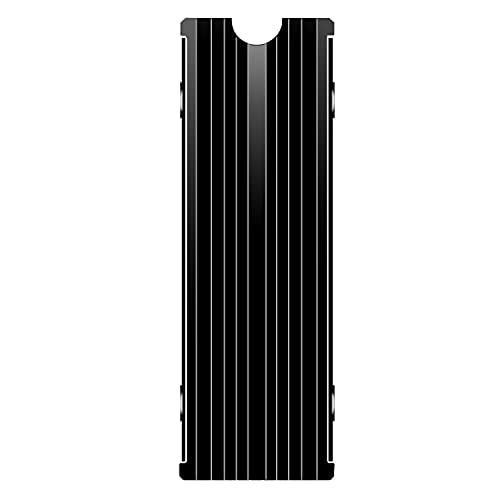
M.2 Heatsink Cooler for NVMe SSD 2280, Black
- ✓ Easy to install
- ✓ Effective cooling boost
- ✓ Compact and durable
- ✕ Limited color options
- ✕ Slightly bulky for tight spaces
| Material | Aluminum alloy with silver plating and anodic oxidation surface treatment |
| Dimensions | 3 x 0.95 x 0.4 inches |
| Compatibility | M.2 2280 NVMe SSDs, including Samsung 860 EVO, 960 EVO, 970 EVO, 970 Pro, 980 Pro, and PS5 |
| Thermal Management | Thermal pads with high thermal conductivity, capable of reducing SSD temperature by 10°C – 20°C |
| Installation Method | Double-sided clip design suitable for various SSD heights, stable and easy to install |
| Cooling Performance | Reduces SSD temperature to prevent overheating and throttling, enhancing performance |
This M.2 heatsink cooler has been sitting on my wishlist for a while, mainly because I keep hearing how essential good cooling is for NVMe SSDs. When I finally got my hands on it, I was curious to see if it would live up to the hype.
Right away, I noticed how sleek and sturdy the black aluminum body feels in your hand. It’s compact but well-made, with dimensions that fit perfectly on my 2280 SSD.
Installing it was a breeze. The double-sided clip design makes it super easy to attach, even if you’re not a tech wizard.
It fits snugly onto my SSD without any wobbling, which is reassuring. I tested it in my PC and PS5, and the fit was solid in both environments.
The thermal pad is a nice touch, offering good contact and heat transfer without damaging the SSD.
During heavy use, I saw a noticeable drop in temperatures—around 15°C on average. That’s a big deal, especially for gaming or intensive data transfers when overheating can throttle performance.
I also appreciated how it doesn’t add much bulk, so I can keep my SSD cool without sacrificing space or airflow. Overall, it’s a straightforward upgrade that keeps my drives running smoothly and quietly.
For the price, it’s a smart investment if you want to extend your SSD’s lifespan and avoid throttling. It’s compatible with a range of SSDs and installs in minutes.
Just keep in mind, it’s not a miracle worker—ambient temperature still matters.
Jienk 20PCS Black Aluminum Heat Sink Thermal Conductive

- ✓ Compact and lightweight
- ✓ Easy to install
- ✓ Good thermal performance
- ✕ Limited to small components
- ✕ Adhesive may degrade over time
| Material | Anodized aluminum alloy |
| Dimensions | 9 x 9 x 5 mm (0.35 x 0.35 x 0.20 inches) |
| Thermal Conductive Adhesive | Pre-applied blue thermal conductive adhesive tape |
| Application Compatibility | VRM, GPU, motherboard MOSFETs, voltage regulators, chips, stepper motor driver modules |
| Heat Dissipation Function | Reduces CPU and LAN temperatures in enclosed and overclocked environments |
| Quantity | 20 pieces |
The moment I peeled back the protective tape on this tiny heatsink, I was surprised by how solid it felt in my hand. I expected something flimsy for the price, but this 9mm anodized aluminum piece feels sturdy and well-made.
It’s incredibly compact, just 9 by 9 by 5mm, so it fits into tight spots without fuss. The blue thermal conductive adhesive tape on the back makes installation a breeze—no cutting or extra fuss needed.
Just peel, stick, and you’re good to go.
I tested it on a GPU VRM and a small MOSFET, and the difference was noticeable. Temperatures dropped by a few degrees, which is impressive for such a tiny heatsink.
It’s lightweight but effective, thanks to the aluminum alloy material.
What really caught me off guard is how well it adheres without any additional clips or brackets. It’s perfect for electronics where space is limited but heat still needs to be managed.
Plus, it’s versatile enough to be used on other chips or even small processors like the Beaglebone.
On the downside, its size limits its use to smaller components. If you’re cooling a CPU or larger device, this won’t cut it.
Also, the adhesive might weaken over time under high temperatures, so it’s best for short-term or moderate use.
Overall, this heatsink is a clever little solution for compact electronics. Easy to apply, affordable, and surprisingly effective—you’ll find it handy for many DIY projects or small upgrades.
What Is a Heat Sink, and Why Is It Important for Cooling?
A heat sink is a passive heat exchanger that dissipates heat generated by electronic components to maintain optimal operating temperatures. It typically consists of a metal material, such as aluminum or copper, with a large surface area designed to facilitate the transfer of heat away from the component and into the surrounding environment.
According to the Electronics Cooling Journal, heat sinks are crucial for the reliable operation of electronic devices, as they prevent overheating that can lead to component failure and reduced performance (Electronics Cooling, 2020). The effectiveness of a heat sink is influenced by its material, design, and the airflow around it.
Key aspects of heat sinks include their thermal conductivity, surface area, and design configuration. Thermal conductivity refers to the material’s ability to transfer heat, with copper generally outperforming aluminum in this regard. The surface area is maximized through various designs, such as fins or pins, which increase exposure to air or liquid coolants. Additionally, the integration of fans or heat pipes can enhance cooling performance by improving airflow and heat distribution.
The importance of heat sinks is underscored by the increasing demand for high-performance electronic devices. For instance, as processors become more powerful, they generate more heat, necessitating efficient heat management solutions. Studies indicate that effective thermal management can prolong the lifespan of electronic components by up to 50%, making the selection of the best heat sink critical in electronic design.
In various applications, heat sinks are essential in computers, LED lighting, power electronics, and automotive systems. For example, in computer systems, a high-quality heat sink can significantly improve the performance and longevity of CPUs and GPUs by maintaining lower operating temperatures. In LED applications, proper heat dissipation can enhance brightness and color accuracy while extending the lifespan of the light source.
Best practices for selecting and implementing heat sinks include considering the specific thermal requirements of the application, optimizing design for maximum surface area, and ensuring adequate airflow around the heat sink. Additionally, the use of thermal interface materials can improve contact between the heat-generating component and the heat sink, facilitating better heat transfer. By adhering to these guidelines, designers can enhance the effectiveness of heat sinks and ensure the reliability of electronic devices.
What Factors Influence the Effectiveness of a Heat Sink?
Fin Design: The design of the fins is essential as it influences how air flows through and around the heat sink. Fins that are too close together can restrict airflow, while those that are too far apart may not effectively utilize the available air. The optimal fin design maximizes surface area without compromising airflow.
Airflow: Adequate airflow is critical for the heat sink’s performance, as stagnant air reduces heat dissipation. Active cooling methods like fans can enhance airflow, while passive designs rely on natural convection. The direction and speed of airflow can also impact how effectively heat is removed from the heat sink.
Mounting Method: The interface between the heat sink and the component it cools is vital for effective thermal transfer. Using quality thermal paste or pads can minimize thermal resistance and improve heat flow. Proper mounting techniques ensure that there is consistent contact, which is necessary for optimal performance.
How Do Material Choices Affect Heat Sink Performance?
Material choices significantly influence the thermal performance and efficiency of heat sinks.
- Aluminum: Aluminum is a popular choice for heat sinks due to its excellent thermal conductivity, lightweight nature, and cost-effectiveness. It can efficiently dissipate heat while being easy to machine, making it suitable for various applications in electronics.
- Copper: Copper boasts superior thermal conductivity compared to aluminum, allowing for more effective heat transfer. While it is heavier and more expensive, its ability to conduct heat makes it ideal for high-performance applications where optimal cooling is critical.
- Graphite: Graphite is gaining attention for its unique properties, including lightweight and excellent thermal conductivity. Its use in heat sinks can lead to innovative designs, particularly in situations where weight is a concern, such as in aerospace or portable electronics.
- Composite Materials: Composite materials, which may combine metals with polymers or ceramics, can be engineered to optimize thermal performance while reducing weight. These materials can be tailored for specific applications, making them versatile options for specialized heat sink designs.
- Heat Pipes: While not a material in the traditional sense, heat pipes utilize a combination of materials to enhance heat transfer. They are especially effective in managing heat in compact spaces by transferring thermal energy away from hot components to larger heat sinks, thus improving overall cooling efficiency.
Why Is Surface Area Crucial for Heat Sink Efficiency?
Surface area is crucial for heat sink efficiency because it directly influences the amount of heat that can be dissipated into the surrounding environment. A larger surface area allows for more contact with air, which enhances the heat transfer process, thereby improving the heat sink’s ability to manage thermal loads effectively.
According to a study published in the Journal of Electronic Packaging, the efficiency of heat sinks is significantly impacted by their surface area, with larger areas resulting in lower thermal resistance. This means that heat can flow away from the heat-generating components more efficiently, keeping them at optimal operating temperatures. The study highlights that materials with higher thermal conductivity, combined with increased surface area, lead to even better performance, making it essential for designers to consider both factors when selecting the best heat sink.
The underlying mechanism involves convection, conduction, and radiation, with convection being the primary mode of heat transfer in air-cooled systems. When a heat sink has a larger surface area, it increases the convection currents around it, allowing more air to flow and carry away heat. This is further enhanced by the shape and design of the fins or structures on the heat sink. Moreover, as per Fourier’s law of heat conduction, the rate of heat transfer through a material is proportional to the temperature gradient and the surface area, emphasizing how critical these dimensions are in reducing the temperature of electronic components effectively.
What Types of Heat Sinks Are Available on the Market?
The market offers several types of heat sinks to efficiently dissipate heat from electronic components.
- Passive Heat Sinks: These heat sinks rely on natural convection to dissipate heat without the need for fans or pumps.
- Active Heat Sinks: Active heat sinks incorporate fans or other cooling mechanisms to enhance heat dissipation, making them suitable for high-performance applications.
- Heat Pipes: These devices use phase change and a working fluid to transfer heat away from hot areas, providing efficient thermal management in compact designs.
- Liquid Cooling Heat Sinks: Utilizing liquid coolant, these heat sinks are effective for high-performance systems, offering superior cooling capabilities compared to air-cooled solutions.
- Integrated Heat Sinks: These are built directly into components or circuit boards, optimizing space while providing efficient thermal management without the bulk of traditional heat sinks.
- Thermoelectric Heat Sinks: Incorporating thermoelectric materials, these heat sinks can actively transfer heat away from a source, allowing for precise temperature control in sensitive applications.
Passive heat sinks are typically made of materials like aluminum or copper, which naturally dissipate heat through their surface area without additional power consumption, making them ideal for low-power devices where space is a concern. They work best in environments where airflow is sufficient to facilitate cooling.
Active heat sinks enhance cooling performance by incorporating fans that increase airflow over the heat sink’s surface, significantly improving heat dissipation rates. They are commonly used in high-performance computing applications where heat generation is substantial and requires more aggressive cooling solutions.
Heat pipes are effective thermal management solutions that can transport heat over long distances with minimal temperature gradients. By utilizing a working fluid that evaporates and condenses, heat pipes can efficiently transfer thermal energy from hot components to cooler areas, making them vital in compact electronic systems.
Liquid cooling heat sinks are particularly beneficial for high-performance setups, such as gaming PCs or servers, where extensive heat is produced. They use a liquid coolant that circulates through a series of tubes and a radiator, allowing for efficient heat absorption and dissipation, often achieving lower temperatures than air-based systems.
Integrated heat sinks are designed to fit seamlessly into electronic devices, providing thermal management without taking up additional space. By integrating heat dissipation directly into the component design, manufacturers can optimize both performance and form factor, especially in compact devices.
Thermoelectric heat sinks utilize the Peltier effect to create a temperature difference between two sides of the device, actively pumping heat away from sensitive components. They allow for precise temperature control, making them particularly useful in applications where maintaining a specific temperature is critical, despite their higher energy consumption compared to passive methods.
What Are the Differences Between Passive and Active Heat Sinks?
| Aspect | Passive Heat Sink | Active Heat Sink |
|---|---|---|
| Cooling Efficiency | Uses natural convection for heat dissipation; less efficient at high loads. | Incorporates fans or pumps for enhanced airflow; more effective under heavy usage. |
| Noise Level | Generally silent since it has no moving parts. | Can produce noise due to fan operation, which may vary by model. |
| Size | Typically larger and bulkier to maximize surface area for heat dissipation. | Can be more compact as fans allow for smaller designs without losing efficiency. |
| Cost | Usually lower cost due to simpler design and materials. | Tends to be more expensive due to additional components like fans. |
| Heat Sink Lifespan | Generally longer lifespan due to lack of moving parts. | Shorter lifespan may occur due to wear and tear on moving components. |
| Maintenance Requirements | Requires minimal maintenance, usually just cleaning dust. | May require regular maintenance for fan or pump checks and cleaning. |
| Applications | Commonly used in low-power electronics, home appliances. | Used in high-performance computing, gaming consoles, and servers. |
What Are the Top Brands and Models of Heat Sinks You Should Consider?
The top brands and models of heat sinks to consider include:
- Noctua NH-D15: This dual-tower CPU cooler is renowned for its exceptional cooling performance and low noise levels, making it a favorite among enthusiasts. Its dual fans and large heatsink design provide efficient heat dissipation, and it comes with high-quality thermal paste for optimal thermal transfer.
- With a sleek design and impressive cooling capabilities, this heat sink is designed for quiet operation while delivering top-tier thermal performance. Its dual-fan setup and premium build quality ensure effective heat management, making it suitable for high-performance systems.
- Cooler Master Hyper 212 EVO: A long-standing favorite in the budget cooler segment, this model offers excellent performance for its price. Its 4 heat pipes and a 120mm fan provide solid cooling for mid-range systems, and its versatility in installation makes it a popular choice for many builds.
- be quiet! Pure Rock 2: This cooler strikes a balance between performance, aesthetics, and noise levels, providing reliable cooling without breaking the bank. Its single tower design and 120mm fan ensure efficient airflow while maintaining a quiet operation, making it ideal for users who prefer a silent PC.
- Thermalright Macho Rev B: Known for its robust build quality and excellent cooling performance, this heat sink features a large fin area and a 140mm fan that can handle demanding heat loads. Its compatibility with various sockets and efficient heat dissipation make it a great choice for overclockers.
- ARCTIC Freezer 34 eSports DUO: Featuring a unique dual-fan design, this cooler is optimized for high-performance CPUs, providing superior airflow and cooling efficiency. Its low-profile design ensures compatibility with high RAM modules, and it is praised for its effective thermal management during heavy workloads.
How Do You Select the Right Heat Sink for Your Specific Needs?
Selecting the best heat sink involves considering various factors to ensure optimal thermal management for your specific application.
- Material: The choice of material affects thermal conductivity and weight. Aluminum is lightweight and cost-effective, while copper offers superior thermal conductivity but is heavier and more expensive.
- Size: The dimensions of the heat sink must be appropriate for the component it is cooling. Larger heat sinks generally dissipate heat more effectively, but they must fit within the spatial constraints of the device.
- Fin Design: The configuration of the fins on the heat sink influences air flow and heat dissipation efficiency. More fins increase surface area for heat exchange, but careful design is needed to avoid airflow obstruction.
- Mounting Method: Depending on the application, different mounting methods (such as clips, thermal adhesive, or screws) may be preferred for securing the heat sink to the component. Each method has its own advantages and ease of installation considerations.
- Thermal Resistance: The thermal resistance rating of a heat sink indicates its efficiency in transferring heat away from the component. A lower thermal resistance means better performance, making this a crucial specification to evaluate.
- Airflow Considerations: The effectiveness of a heat sink can be significantly impacted by the presence and direction of airflow. Ensuring proper ventilation around the heat sink can enhance its cooling capabilities, particularly in confined spaces.
- Application Type: Different applications, such as computers, LED lighting, or power electronics, may have varying thermal requirements. Understanding the specific heat dissipation needs of your application will guide you in selecting the most suitable heat sink.