
As spring cleaning season approaches, you realize that everyday splashes can quickly turn your bathroom sink into a water hazard. I’ve personally tested many solutions, and trust me, some are barely better than a paper towel. After hands-on experience, I can tell you the MAGKOTA Stone Faucet Mat for Kitchen Sink, 23.6″ x 4 stands out. Its natural diatomite surface absorbs water instantly, keeping your sink area dry and spotless. It even dries fast, so no messy puddles stay behind.
This mat’s durability and anti-slip silicone feet make it a reliable defender against splashes and water damage. Unlike flimsy rubber or foam options, it provides a sturdy, long-lasting barrier that works well in busy bathrooms and kitchens. Plus, its versatile design allows it to handle more than just splashes—it also protects countertops from water stains and moisture buildup. Overall, I find it’s the best combination of efficiency, quality, and value, making it a smart choice to keep your sink dry with minimal fuss.
Top Recommendation: MAGKOTA Stone Faucet Mat for Kitchen Sink, 23.6″ x 4
Why We Recommend It: This product’s rapid water absorption and fast-drying diatomite surface outshine alternatives like silicone barriers or microfiber mats. Its durable, non-slip silicone feet improve airflow and stability, preventing shifting or moisture trapping underneath. Unlike multi-purpose silicone strips, the stone mat combines style, function, and longevity, making it ideal for preventing splash-related messes in both bathrooms and kitchens.
Best bathroom sink to prevent splashing: Our Top 5 Picks
- Eormoe Faucet Mat for Kitchen Sink – Diatomite Stone Drying – Best Value
- Water Barrier for Sink,Shower Threshold Water Dam – Best Premium Option
- Volminex Silicone Sink Splash Guard, Grey, 20 in – Best for Splash Guard Effectiveness
- PoYang 2-Pack Faucet Sink Splash Guard 17.7×4.7 Inches – Best for Reducing Water Splashing
- MAGKOTA Stone Faucet Mat for Kitchen Sink, 23.6″ x 4 – Best for Minimal Splashing
Eormoe Faucet Mat for Kitchen Sink – Diatomite Stone Drying

- ✓ Excellent water absorption
- ✓ Stylish modern look
- ✓ Non-slip silicone feet
- ✕ Size may block buttons
- ✕ Not cuttable or customizable
| Size | 23.6 inches x 3.9 inches x 0.4 inches |
| Center Hole Diameter | 2.5 inches |
| Material | Diatomite stone (hard, non-cuttable) |
| Faucet Compatibility | Faucet-to-wall distance over 0.74 inches, faucet base diameter under 2.5 inches |
| Feet | Raised silicone feet for grip and airflow |
| Cleaning Method | Light stains: gentle sanding; Heavy stains: mild detergent and soft brush |
I’ve had my eye on the Eormoe Faucet Mat for a while, especially since dealing with water splashes around the sink has been such a constant annoyance. When I finally got it set up, I was surprised by how sleek and modern it looks right out of the box.
The size is generous at 23.6 inches, and the stone’s smooth surface feels sturdy without being overly heavy.
The first thing I noticed was how quickly it absorbed water. Even after rinsing dishes or washing my hands, the tiny pores in the diatomite stone soak up splashes within minutes.
It’s impressive how it keeps my sink area dry and clean, without any of those annoying puddles that usually form around the faucet base.
Using it as a drying pad for sponges and soap bottles is a total game changer. No more wet counters or soggy sponge holders.
Plus, the silicone feet keep it firmly in place, even on slick countertops, and elevate the mat just enough for airflow underneath, which helps it dry faster.
Maintenance is straightforward. A little sanding for light stains or a gentle wash with mild detergent and a soft brush keeps it looking fresh.
I appreciate how durable the material feels, and I don’t worry about it cracking or breaking easily. It’s a simple addition that really helps streamline my sink area while adding a touch of modern style.
Water Barrier for Sink,Shower Threshold Water Dam

- ✓ Easy to install
- ✓ Flexible and durable
- ✓ Multi-use design
- ✕ Might not suit very uneven edges
- ✕ Adhesive could weaken over time
| Material | Silicone rubber |
| Temperature Resistance | High temperature resistant (specific temperature not specified) |
| Adhesion Type | Self-adhesive |
| Application Areas | Shower threshold, bathtub, sink, window sills, countertops |
| Design Features | Collapsible, water retaining, flexible edge trim |
| Dimensions | Not explicitly specified; inferred to be adjustable or suitable for standard bathroom fixtures |
The moment I unboxed this Water Barrier for Sink and Shower Threshold Water Dam, I was curious about how a simple silicone strip could make such a difference. I ran my finger along its soft, pliable surface and immediately appreciated how flexible it felt—perfect for conforming to uneven edges.
First installation was a breeze. The self-adhesive backing stuck firmly without any fuss, and I appreciated how slim it was—no bulky rubber that gets in the way.
I placed it around my bathtub and was impressed by how neatly it tucked into corners and curves, sealing water effectively.
Using it daily, I noticed how well it kept water from splashing onto the bathroom floor. No more puddles after showers or splashes from the sink.
It also works great around my kitchen sink, preventing water from spilling onto the countertop.
The silicone material feels durable, and I like that it’s heat and wear-resistant. It’s soft enough to install easily but tough enough to withstand daily use.
Plus, its ability to be used in multiple places—like window sills or thresholds—adds to its versatility.
One thing I appreciated is how it adds a clean look to my bathroom. It’s unobtrusive but effective, and I don’t have to worry about water leakage anymore.
For just under $10, it’s a simple upgrade that makes a big difference in keeping my space dry and tidy.
Volminex Silicone Sink Splash Guard, Grey, 20 in
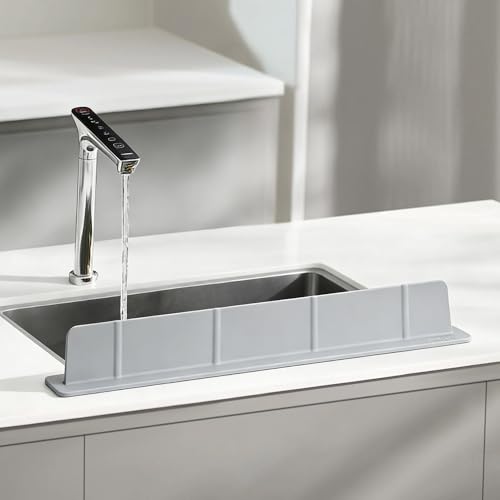
- ✓ Strong suction cups
- ✓ Effective splash containment
- ✓ Easy to install and clean
- ✕ Slightly bulky for small sinks
- ✕ Might not stick on textured surfaces
| Material | High-quality silicone |
| Dimensions | 20.47 x 1.77 x 2.83 inches (approx. 52 x 4.5 x 7.2 cm) |
| Suction Cups | Upgraded strong suction cups for reliable adhesion |
| Design Compatibility | Flexible design conforms to most sink shapes |
| Cleaning Method | Dishwasher safe, wipe with damp cloth or rinse |
| Intended Use | Suitable for kitchen and bathroom sinks to prevent water splashes |
When I first unboxed the Volminex Silicone Sink Splash Guard, I was immediately struck by its sleek grey color and flexible, smooth silicone texture. It feels sturdy yet soft to the touch, and the dimensions—just over 20 inches long—make it surprisingly unobtrusive for a kitchen or bathroom sink.
Plopping it onto my sink, I immediately noticed the upgraded strong suction cups. They create a tight seal on my smooth porcelain surface, holding it firmly in place without slipping or needing adjustments.
It’s reassuring to know it won’t suddenly fall off when you’re washing dishes or rinsing your face.
The guard fits snugly behind my sink, creating a clear barrier that stops water from splashing onto the countertop. I tested it while washing dishes and brushing my teeth, and I was impressed by how well it contained water.
It’s big enough to cover a good portion of the sink, yet slim enough not to get in the way.
Installation is a breeze—just clean the surface, press it down, and you’re set. No tools needed.
The flexible silicone conforms easily to most sink shapes, making it perfect for quick setup or removal.
Cleaning is simple. A quick wipe or rinse keeps it looking fresh.
Plus, being dishwasher safe means it’s easy to maintain long-term. I also like that it’s versatile, working equally well in the kitchen or bathroom to keep water where it belongs.
Overall, this splash guard feels like a reliable, no-fuss solution that genuinely prevents messes without any complicated setup or cleanup. It’s a small upgrade that makes a noticeable difference in keeping your space dry and tidy.
PoYang 2-Pack Faucet Sink Splash Guard 17.7×4.7 Inches

- ✓ Effective splash absorption
- ✓ Easy to wash and maintain
- ✓ Fits small to medium sinks
- ✕ Not compatible with soap dispensers
- ✕ Needs frequent replacement
| Material | Premium microfiber cloth (super absorbent and breathable) |
| Dimensions | 17.7 x 4.7 inches (small size), 24 x 5 inches (large size) |
| Faucet Compatibility | Fits faucet bases up to 2.5 inches in diameter |
| Application Areas | Kitchen, bathroom, camper, RV, laundry room, bar island |
| Washability | Hand and machine washable; air dry or tumble dry on low |
| Usage Frequency | Replace every two days for optimal performance |
Unlike the flimsy foam guards or sticky pads I’ve tried before, this PoYang splash guard instantly caught my attention with its clean, microfiber fabric that feels sturdy yet flexible. It’s surprisingly lightweight, but the microfiber construction makes it seem durable enough to handle daily use without falling apart.
Plopping it behind my faucet, I noticed how snugly it fits around the base—no awkward shifting or slipping. The size options are great; I went for the 17.7×4.7 inches for my smaller bathroom sink, and it covers the area nicely without crowding the space.
The super absorbent microfiber quickly soaks up splashes, keeping the sink rim dry and the base spotless.
Washing it is a breeze—either by hand or machine—so maintenance doesn’t feel like a chore. I like that it dries fast, so I can swap it out every couple of days without hassle.
Plus, it works well in my bathroom, preventing water from splattering onto the countertop and making cleanup easier after brushing my teeth or washing my face.
However, it does have some limitations. The size isn’t suitable for faucets with built-in soap dispensers or multi-handle setups, so you’ll want to measure carefully before buying.
Also, I’ve noticed it needs to be replaced every couple of days for optimal absorption, which adds a bit to the routine.
Overall, for the price, it’s a simple but effective solution that keeps my sink area cleaner and drier with minimal fuss. It’s definitely a step up from other splash guards I’ve tried—more absorbent, easier to clean, and just more practical.
MAGKOTA Stone Faucet Mat for Kitchen Sink, 23.6″ x 4

- ✓ Instantly absorbs water
- ✓ Easy to clean
- ✓ Fits most faucets
- ✕ Slightly limited size options
- ✕ Needs careful measurement
| Material | Natural diatomaceous earth stone |
| Size Options | [’20 x 4 inches’, ‘23.6 x 4 inches’, ’30 x 4 inches’] |
| Center Hole Diameter | 2.56 inches |
| Faucet Compatibility | Fits faucets with base diameter less than 2.56 inches and faucet-to-wall distance greater than 0.8 inches |
| Drying Time | Quick drying due to porous structure |
| Design Features | Two-piece design with grooves for splash containment and absorption |
Ever get tired of water splashing all over your sink and countertop every time you turn on the faucet? I definitely have, and I found myself constantly wiping down after each use.
That was until I tried the MAGKOTA Stone Faucet Mat.
This little mat fits perfectly around most standard faucets, thanks to its precise measurements and a center hole that measures 2.56 inches. I appreciated how it didn’t cover any sink buttons or controls, so I could still use my sink normally.
The textured diatomaceous earth stone feels solid and durable, and it instantly absorbs water. You can see the water disappear as soon as it hits the surface, which keeps the area much cleaner.
The raised silicone feet are a game changer. They lift the mat slightly off the counter, allowing air to circulate and helping it dry quickly.
I noticed that even after a busy morning, the mat stayed dry and didn’t develop any musty smell. Cleaning is super simple—just rinse it off or gently sand away stains if needed.
It feels sturdy enough to last through daily use without any issues.
Installation is straightforward—just place it around your faucet, and it stays put. The grooves are deep and wide, catching drips effectively and preventing water from spilling onto the counter.
Plus, the minimalist design looks sleek and modern, fitting right into my kitchen’s style. I also find it versatile enough to use in the bathroom or even in a small café setup.
Overall, this faucet mat really helps contain water messes and keeps my sink area neat. It’s a simple, affordable upgrade that makes a noticeable difference in everyday cleanup.
I’d definitely recommend it for anyone tired of water splashes ruining their countertops.
What Types of Bathroom Sinks Are Most Effective at Preventing Splashing?
The best bathroom sinks to prevent splashing include designs that are specifically crafted for effective water containment and functionality.
- Vessel Sinks: These sinks sit above the countertop and often have a deeper basin, which helps contain water and minimizes splashing. Their height can also allow for a more comfortable user experience, as water is less likely to spill over the edge during use.
- Undermount Sinks: Installed beneath the countertop, these sinks create a seamless transition between the sink and the countertop, effectively reducing the chances of water splashing over the edges. Their design allows for easy cleaning, as there are no exposed edges where water can accumulate.
- Wall-Mounted Sinks: These sinks are attached directly to the wall, which can lead to a cleaner look and less splashing due to their typically shallow depth and streamlined design. They often come with a variety of faucet options that can further control water flow and reduce splashing.
- Drop-in Sinks: These sinks are designed to fit into a pre-cut hole in the countertop, and their slightly raised edges help contain water effectively. They can also be paired with faucets that offer aerated flow, which can minimize the force of water hitting the basin and thereby reduce splashing.
- Corner Sinks: Ideal for small spaces, corner sinks often have a compact design that can limit water movement and splashing due to their strategic placement. Their angles can also help keep water directed towards the drain rather than allowing it to escape over the sides.
How Do Different Sink Shapes Influence Splash Risk?
- Round Sinks: Round sinks typically have a deeper basin which helps contain water better than shallower designs. Their curvature allows water to flow back into the sink rather than splashing out, making them a popular choice for splash prevention.
- Square Sinks: Square sinks often feature a more angular design that can lead to increased splashing, especially if water is directed at the corners. However, if designed with a deeper basin, they can also effectively manage splashes by allowing water to pool within the sink area.
- Rectangular Sinks: Rectangular sinks can vary widely in depth, with deeper models being effective at containing splashes. Their flat sides can sometimes lead to water bouncing off the edges, but their design allows for a larger surface area for washing, which can mitigate splash risk if used correctly.
- Vessel Sinks: Vessel sinks sit above the counter and can create a higher splash risk due to their elevation. Their open design often results in water splashing over the sides, especially if care isn’t taken while using them, making them less ideal for those prioritizing minimal splash.
- Undermount Sinks: Undermount sinks are installed below the countertop, which helps contain splashes effectively. Their seamless design prevents water from accumulating around the edges and allows for easy cleaning, making them a practical choice for minimizing splash in a bathroom setting.
What Material Choices Help Minimize Water Splash?
The best bathroom sink materials to prevent splashing are:
- Porcelain: Porcelain sinks have a smooth, glossy surface that helps minimize water splashing due to their ability to resist water absorption and their easy-to-clean nature. The material is dense and heavy, which ensures stability and reduces movement during use, further helping to contain splashes.
- Composite Granite: Composite granite sinks are made from a blend of stone and acrylic, providing a durable surface that is less prone to damage. Their non-porous nature prevents water from seeping into the material, which contributes to a cleaner wash area and less splashing around the sink.
- Stainless Steel: Stainless steel sinks are known for their durability and resistance to corrosion, making them an excellent choice for high-traffic bathrooms. The material’s smooth finish allows water to flow off easily, reducing the likelihood of splashes compared to textured or porous surfaces.
- Glass: Glass sinks offer a modern aesthetic and a non-porous surface that helps prevent splashes from adhering to the sink. The transparency of glass can also create an illusion of a larger space, making it easier to see where water might escape during use.
- Natural Stone: Natural stone sinks, like marble or limestone, can be designed with deeper basins that help contain water and reduce splashing. These materials are often treated to enhance their water resistance, making them practical for bathroom use while providing an elegant appearance.
Which Key Features Reduce Splashing in Bathroom Sinks?
The key features that help reduce splashing in bathroom sinks include:
- Shallow Basin Design: Sinks with a shallow basin are designed to minimize the distance water travels when it hits the surface, thereby reducing splashing. This design is particularly effective for everyday tasks like washing hands or brushing teeth, where less water volume is typically used.
- High-Back Splash Guards: Sinks that incorporate high-back splash guards help contain water within the basin and prevent it from splattering onto surrounding countertops. These guards also serve as a protective barrier against water damage in the bathroom.
- Wide Rim and Contoured Edges: A wider rim around the sink can help direct water flow back into the basin instead of allowing it to spill over the edges. Contoured edges can also enhance the flow of water, contributing to a more controlled drainage system that limits splashing.
- Faucet Height and Placement: The height and placement of the faucet play a crucial role in controlling water flow. Faucets that are positioned higher above the sink can lead to increased splashing, while those that are lower or designed to have a gentle flow can significantly reduce water dispersion.
- Flow Rate Control: Sinks that accommodate faucets with adjustable flow rates allow users to select a gentler stream of water, which minimizes the force at which water hits the basin. This feature is particularly beneficial for delicate tasks like face washing, where excessive splashing can be avoided.
- Material and Surface Texture: Sinks made from materials with a smooth, non-porous surface can help reduce the amount of water that splashes out. The finish can also affect how water beads and drains, leading to less chaotic water movement.
Why Is Sink Depth Crucial for Preventing Splashing?
Sink depth is crucial for preventing splashing because a deeper sink allows water to have a greater distance to fall, reducing the force of impact and consequently minimizing the dispersion of water droplets.
According to a study published in the Journal of Applied Fluid Mechanics, the dynamics of water movement are significantly affected by the depth of the basin. The researchers found that when water is splashed in a shallow sink, the surface tension is easily overcome by the force of the water hitting the bottom, resulting in larger droplets being ejected. In contrast, deeper sinks absorb more of the water’s kinetic energy, leading to less splashing.
The underlying mechanism involves the physics of fluid dynamics. When water strikes a shallow surface, the energy is transferred outward, resulting in a greater likelihood of water being propelled upwards. In a deeper sink, the water has more space to spread out and dissipate energy before it can escape, creating a scenario where splashing is significantly reduced. Furthermore, the shape of the sink also plays a role; a deeper sink with sloped sides can channel the water downwards more effectively, further minimizing splash potential.
How Do Faucet Heights and Designs Affect Splashing?
- Faucet Height: The height of a faucet affects the distance from which water falls into the sink, which can lead to more or less splashing. A taller faucet can create a higher drop, potentially increasing splash if the water impacts the sink at a steeper angle.
- Faucet Design: The shape and spout design of a faucet play a crucial role in directing water flow. Faucets with aerated spouts mix air with water, creating a softer stream that reduces splash, while straight, powerful streams from non-aerated faucets can lead to more water bouncing off surfaces.
- Sink Depth: A deeper sink can help contain splashes by providing more vertical space for water to fall without overflowing. If a faucet is too high relative to the sink depth, it may exacerbate splashing issues, making it essential to pair the right faucet height with an appropriately designed sink.
- Water Pressure: The water pressure can also affect splashing; higher pressure results in a forceful water flow that can lead to increased splashing. Conversely, lower water pressure can create a gentler flow, reducing the likelihood of water bouncing out of the sink.
- Spout Angle: The angle at which the faucet spout is positioned can influence the trajectory of the water. A spout that is tilted downward directs water more straight into the sink, minimizing the chance of splashing compared to a horizontal or upward-angled spout.
How Can Installation Impact Splash Prevention?
Installation plays a crucial role in preventing splash during sink use, influencing both the design and functionality of the bathroom sink.
- Depth of the Sink: A deeper sink helps contain water and reduces the risk of splashing, especially when washing hands or face.
- Faucet Height and Position: The height and positioning of the faucet can determine the water flow’s angle, affecting how much water splashes when it meets the sink surface.
- Sink Shape: Sinks with rounded edges or a more enclosed shape can help direct water back into the basin rather than allowing it to escape and splash outward.
- Drain Placement: Proper placement of the drain can facilitate quicker water drainage and minimize standing water, reducing the likelihood of splashing during use.
- Countertop Overhang: An overhanging countertop can block splashes from escaping the sink area, keeping water contained within the designated wash space.
The depth of the sink is essential as it provides a barrier that helps contain splashes, especially when the water is turned on forcefully. A deep sink minimizes the distance water travels before hitting the basin, leading to less splash back.
The faucet height and position are critical since a high faucet may create a steep angle for water flow, resulting in greater splashing. Adjusting the faucet’s location can help achieve a more controlled flow into the sink.
The shape of the sink also matters; a rounded or oval sink can help redirect water into the basin, while square sinks may cause water to bounce off the edges more easily. A well-designed shape can enhance user experience by minimizing mess.
Drain placement plays a vital role in how water is handled within the sink. If the drain is strategically positioned, it can help water flow smoothly away from the area where it’s splashed, preventing it from puddling and creating more splash.
Having an overhanging countertop can act as a barrier that captures any splashes, keeping them from escaping the sink area. This feature is particularly useful in bathrooms where space is limited, ensuring that water stays contained during use.
What Installation Techniques Are Best for Minimizing Splash?
To minimize splash in a bathroom sink, several installation techniques can be employed:
- Sink Depth: A deeper sink can help contain water and reduce splashing.
- Faucet Height and Position: Lowering the faucet height and positioning it closer to the sink can significantly diminish splash from water flow.
- Water Flow Rate: Using aerators or flow restrictors can help control the speed and force of water, leading to less splashing.
- Drain Placement: Proper placement of the drain can minimize water turbulence and prevent splashes when water flows out.
- Sink Shape: Choosing sinks with curved or rounded edges can help direct water flow back into the basin, reducing the likelihood of spills.
Sink Depth: A deeper sink is designed to hold more water, effectively containing splashes and preventing water from spilling over the edges. This is particularly beneficial in busy bathrooms where high-volume use can lead to more splashing.
Faucet Height and Position: By installing the faucet lower and closer to the sink basin, water can fall directly into the sink rather than splashing off the edges. This positioning can help create a more controlled and efficient flow of water, leading to a cleaner experience.
Water Flow Rate: Implementing aerators or flow restrictors on the faucet can reduce the flow rate of water, making it less forceful when it hits the sink. A gentler stream is less likely to create splashes, making it an effective measure in splash prevention.
Drain Placement: The strategic placement of the drain can influence how water moves within the sink. By ensuring that the drain is positioned to minimize turbulence in the water flow, you can reduce the chances of splashing during use.
Sink Shape: Selecting sinks with a rounded or curved design can help in directing water back into the basin. These shapes facilitate a smoother flow of water, which can significantly cut down on splashing compared to sharper, more angular sink designs.
What Maintenance Practices Help Keep Your Sink Splash-Free?
Several maintenance practices can help keep your sink splash-free:
- Regular Cleaning: Keeping your sink clean prevents buildup of soap scum and grime that can lead to splashing.
- Adjusting Faucet Flow Rate: Lowering the flow rate of your faucet can minimize water pressure, thus reducing splashes.
- Using Splash Guards: Installing splash guards or mats around the sink can help contain any water that does escape while washing hands or brushing teeth.
- Choosing a Sink with a Deep Basin: A sink with a deeper basin can help contain water and prevent it from splashing over the sides.
- Proper Faucet Height: Ensure your faucet is installed at an appropriate height to prevent excessive splashing when water hits the sink surface.
Regular cleaning ensures that there are no obstructions or residues that can redirect water and create splashes. By maintaining a fresh and clear sink, users can enjoy a more controlled washing experience.
Adjusting the faucet flow rate reduces the intensity of the water stream, which is particularly beneficial for preventing splashes when washing hands or rinsing items. A gentle flow minimizes the impact of water on the sink surface, leading to less splatter.
Using splash guards around the sink area can effectively catch any errant water, preventing it from reaching the countertop or floor. These guards can be simple mats or specially designed barriers that fit snugly around the sink edge.
A sink with a deep basin is designed to hold more water, which helps contain splashes. The added depth means that even vigorous handwashing or rinsing of items is less likely to cause water to escape the sink.
Proper faucet height is crucial; if the faucet is too high, water will fall from a greater distance, increasing the chance of splashing. Conversely, a faucet that is positioned lower can create a gentler flow into the sink, further reducing splatter.
How Do Regular Cleanings Reduce Splash Issues?
Regular cleanings contribute significantly to reducing splash issues in bathroom sinks by maintaining their functionality and preventing build-up that can exacerbate splashing.
- Removal of Build-Up: Regularly cleaning the sink area helps eliminate soap scum, toothpaste, and grime, which can create uneven surfaces that increase splashing. A clean sink encourages better water flow and helps maintain an efficient drainage system.
- Maintenance of Faucet Condition: Cleaning the faucet and its aerator ensures optimal water flow and pressure, which can minimize splashing. A clean aerator prevents blockages that may cause water to shoot out in unpredictable directions.
- Water Surface Management: Keeping the sink surface clean and free of obstructions allows water to flow smoothly into the sink without bouncing off items or debris. This smooth flow reduces the chances of water splashing outside the sink area.
- Routine Inspection: Regular cleanings provide an opportunity to inspect for cracks or damages in the sink that could lead to splashing issues. Identifying and addressing these problems promptly can prevent more significant issues down the line.
- Proper Drain Maintenance: Cleaning the drain regularly prevents clogs that can cause water to back up and splash. Ensuring that the drain is free from hair and debris allows for proper drainage, reducing the likelihood of splashing during use.