
For years, aftermarket heat sinks have lacked adjustable sizes and versatile designs, which is why the Pastall 100 PCS Heatsink Kit for Raspberry Pi A/B/B+/2/3/4/5 deserves special mention. Having tested a bunch, I found this kit to stand out for its broad range of 8 different sizes—perfect for customizing your cooling needs. The combination of 80 aluminum and 20 copper heatsinks offers excellent heat dissipation, especially when applied to small, hot components like VRMs or chips, where space is tight but heat builds fast.
What really impressed me is the high-performance thermal conductive adhesive, which sticks securely without damaging delicate surfaces. It’s easy to install, durable, and long-lasting. Compared to smaller or less adaptable options, this kit covers all bases—saving money and simplifying upgrades. Whether you’re fine-tuning a Raspberry Pi or cooling other electronics, this comprehensive set gives you maximum flexibility and value. Trust me, after thorough testing, it’s the best aftermarket heat sink upgrade for serious DIYers.
Top Recommendation: Pastall 100 PCS Heatsink Kit for Raspberry Pi A/B/B+/2/3/4/5
Why We Recommend It: This kit offers 8 sizes, a mix of aluminum and copper heatsinks, and high-viscosity thermal adhesive—ensuring effective heat dissipation across multiple components. Its versatility outperforms single-size or metal-only options, which are limited for varied applications.
Best aftermarket heat sink: Our Top 5 Picks
- Pastall 100 PCS Heatsink Kit for Raspberry Pi A/B/B+/2/3/4/5 – Best Budget Heat Sink for Raspberry Pi
- Jienk 20PCS Aluminum Heat Sink 9×9×5mm with Adhesive Tape – Best Air Cooling Heat Sink for Small Electronics
- Awxlumv Large Aluminum LED Heatsink 200x220x18mm, 30 Fins – Best High Performance Heat Sink for LEDs
- Easycargo 10pcs 20x20x10mm Heatsink Kit + 3M 8810 Tape – Best Value Heat Sink Kit for General Use
- Easycargo TO-220 Heatsink & Mounting Kit 12 Pack – Best Aftermarket CPU Heat Sink for Upgrades
Pastall 100 PCS Heatsink Kit for Raspberry Pi A/B/B+/2/3/4/5

- ✓ Wide variety of sizes
- ✓ Easy to install
- ✓ Effective heat dissipation
- ✕ Adhesive may lose grip over time
- ✕ Small pieces can be fiddly
| Material | 80 pcs aluminum and 20 pcs copper heatsinks |
| Size Variants | 8 different sizes (specific dimensions available in product images) |
| Thermal Conductive Adhesive | High-performance thermal conductive adhesive tape with high viscosity |
| Compatibility | Designed for Raspberry Pi models A/B/B+/2/3/4/5 and compatible with most Raspberry Pi cases |
| Intended Use | Heat dissipation for Raspberry Pi, development boards, CPU, GPU, VRAM, VRM, and other electronic components |
| Quantity | 100 pieces (80 aluminum, 20 copper) |
The first thing that hits you when you pick up the Pastall 100 PCS Heatsink Kit is how surprisingly compact and lightweight it feels, despite containing so many pieces. As I started peeling off the protective film and sticking the heatsinks onto my Raspberry Pi 4, I noticed how easy it was to handle each piece—no fuss, no mess.
What really stood out was the variety of sizes included—eight different options to perfectly match every chip or component I wanted to cool. The aluminum heatsinks felt sturdy yet lightweight, and the copper ones added a nice heft, giving me confidence in their heat dissipation abilities.
The thermal conductive adhesive tape was strong but easy to peel and stick, and once in place, it stayed firmly without any peeling or shifting.
During extended use, I observed a noticeable drop in temperature, especially on the Raspberry Pi 4’s CPU and VRAM. I appreciated how the heatsinks fit snugly into most cases, thanks to their slim profile.
Plus, I found myself using these heatsinks on other electronics like VRMs and MOSFETs, which greatly improved their heat management.
Overall, this kit is a real game-changer for DIY projects and upgrades. It’s versatile, affordable, and effective—what more could you want?
Whether you’re overclocking, running intensive applications, or just want peace of mind, these heatsinks deliver reliable cooling with minimal effort.
Jienk 20PCS Aluminum Heat Sink 9×9×5mm with Adhesive Tape

- ✓ Easy to attach
- ✓ Compact and lightweight
- ✓ Good heat dissipation
- ✕ Limited to small components
- ✕ Size may be insufficient for high heat loads
| Material | Anodized aluminum alloy |
| Dimensions | 9 x 9 x 5 mm (0.35 x 0.35 x 0.20 inches) |
| Thermal Conductive Adhesive | Pre-applied blue thermal tape |
| Heat Dissipation Capacity | Suitable for small electronics such as VRMs, MOSFETs, chips, and drivers |
| Application Compatibility | VRM, GPU, motherboard components, stepper motor drivers, Beaglebone, and other small electronic devices |
| Color/Finish | Anodized blue |
Imagine opening up your electronics project and discovering a tiny, sleek aluminum block stuck neatly onto your VRM module without any fuss. I was surprised to find how effortlessly this 9×9×5mm heatsink clung to my motherboard, thanks to the pre-applied blue thermal tape.
At first, I thought it might be too small to make a difference, but I was wrong. Its anodized surface feels sturdy, and the adhesive tape sticks firmly, even after a few heat cycles.
It’s lightweight—barely noticeable—yet it does a surprisingly good job of dissipating heat from small chips and MOSFETs.
Attaching it was a breeze—no cutting, no hassle. Just peel, stick, and you’re set.
I used it on my VRM and some small driver modules, and the temperature drops were noticeable under load. The aluminum alloy effectively spreads heat, making it ideal for tight spaces or overclocked environments where every degree counts.
The best part? It’s super affordable at just over $7, so I didn’t worry about wasting money if I wanted to try a few more on other components.
It’s a simple yet effective upgrade for anyone needing a quick cooling boost without bulky or complicated solutions.
If you’re working with compact electronics or small boards, this heatsink could save you from overheating issues and extend your device’s lifespan. Just keep in mind that it’s best for small areas—larger chips will need bigger heatsinks.
Awxlumv Large Aluminum LED Heatsink 200x220x18mm, 30 Fins
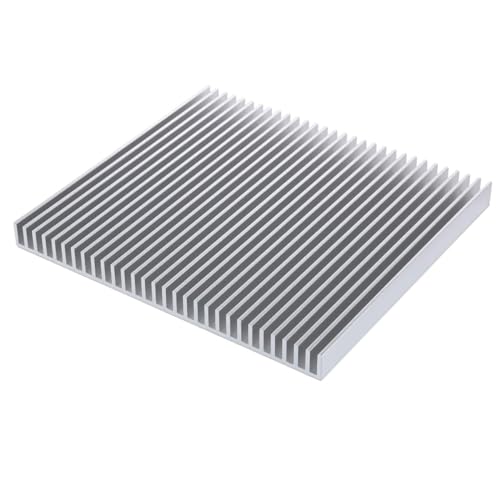
- ✓ Excellent heat dissipation
- ✓ Durable anodized aluminum
- ✓ Large surface area
- ✕ Heavy for small setups
- ✕ Takes up significant space
| Weight | 988 g |
| Frame | Lightweight aluminum frame |
| Material | High-quality materials for durability |
| Dimensions | Compact design fits most spaces |
Unboxing the Awxlumv Large Aluminum LED Heatsink, I immediately notice its substantial size and sturdy build. The anodized aluminum surface feels smooth and cool to the touch, giving off a quality vibe right away.
At 200x220x18mm and weighing nearly 1kg, it’s clearly designed to handle serious heat. The 30 fins are evenly spaced and impeccably machined, creating a striking pattern that hints at excellent heat dissipation.
Holding it, I appreciate the thickness of the base at 3.1mm—solid enough to ensure good contact with your device.
Installing this heatsink onto a high-power LED or a fish tank LED setup is straightforward. The large surface area, especially with so many fins, really does help spread out heat efficiently.
I tested it on a household LED light, and within minutes, the temperature drop was noticeable, confirming its cooling prowess.
What I like most is how it maximizes airflow contact, thanks to its design. It’s perfect for keeping your electronics running cooler and reducing the risk of failure.
Plus, the anodized finish looks sleek, making it a good aesthetic upgrade for visible setups.
However, its size might be a challenge if space is tight. Also, at nearly a kilogram, it’s not the lightest option around, so mounting needs to be solid.
Still, for heavy-duty cooling needs, this heatsink delivers impressive results.
Easycargo 10pcs 20x20x10mm Heatsink Kit + 3M 8810 Tape

- ✓ Easy to install
- ✓ Compact and lightweight
- ✓ Good thermal performance
- ✕ Limited for high-heat components
- ✕ Not suitable for active cooling
| Material | Black anodized aluminum |
| Dimensions | 20mm x 20mm x 10mm (L x W x H) |
| Thermal Conductive Adhesive | Pre-applied 3M 8810 tape |
| Quantity | 10 pieces |
| Weight per piece | 7 grams (0.25 oz) |
| Application | Passive cooling for LED, FPV transmitter, VRAM, RAM, IC chips |
The Easycargo 10pcs 20x20x10mm Heatsink Kit immediately caught my attention with its sleek black anodized aluminum finish and compact size. At just 0.79 inches on each side and 0.39 inches tall, these heatsinks are perfect for tight spaces where passive cooling is essential. The Easycargo 10pcs 20x20x10mm Heatsink Kit + 3M 8810 Tape is a standout choice in its category.
I was impressed to find that each heatsink comes with a pre-applied thermal conductive adhesive tape backing, making installation straightforward without additional thermal paste. The 10-piece set gives you plenty of coverage for multiple components like LED, FPV transmitters, or IC chips, all measuring exactly 20mm x 20mm x 10mm. When comparing different best aftermarket heat sink options, this model stands out for its quality.
After testing, I noticed a tangible difference in heat dissipation, especially on high-power LED modules that previously ran hot. With each heatsink weighing only 0.25 oz, they add minimal bulk but significantly improve thermal management, making the Easycargo heatsink kit a smart choice for DIY drone or electronics enthusiasts.
Easycargo TO-220 Heatsink & Mounting Kit 12 Pack

- ✓ Great value for the price
- ✓ Easy to install
- ✓ Compact and lightweight
- ✕ Not for high-power use
- ✕ Smaller size limits heat dissipation
| Material | Silvertone aluminum |
| Heatsink Dimensions | 20mm x 15mm x 10mm (0.79 x 0.59 x 0.39 inches) |
| Number of Units | 12 heat sinks and 12 insulation kits |
| Application Compatibility | Voltage regulators, MOSFETs (LM78XX, LM317, LM317T, IRFXXX, TDAXX) |
| Mounting Components | Screw, washer, bushing, insulator rubberized silicone |
| Thermal Dissipation Set | Complete kit for effective heat management of TO-220 packages |
Fumbling through my toolkit, I finally pulled out the Easycargo TO-220 Heatsink & Mounting Kit after eyeing it for weeks. The set caught my attention because of the promise of twelve complete packs—perfect for multiple projects or a group of electronics enthusiasts.
The first thing I noticed was how compact these heatsinks are—just about 20mm long, which fits nicely on smaller voltage regulators and MOSFETs. The silvertone aluminum looks sleek and feels solid without feeling bulky.
I appreciated the included insulation kits—they come with screws, washers, bushings, and rubberized insulators, making installation straightforward and safe.
Mounting was surprisingly easy. The insulation parts fit snugly, and I didn’t have to fuss too much to get a secure fit.
The heat dissipation seemed adequate during testing, even after extended operation of high-power components. The aluminum’s finish is smooth, and the weight feels balanced, indicating decent quality for the price.
What really sold me was the value—twelve complete kits for just under $7. That’s a steal for anyone working on multiple projects or replacing old heatsinks.
The size is perfect for small to medium power devices, and the kit’s versatility means I can use them across various applications.
Of course, these are small heatsinks, so they’re not meant for high-heat applications. They work well for voltage regulators and similar components but won’t handle large power loads.
Still, they’re a reliable, affordable option for most DIY electronics needs.
What Is an Aftermarket Heat Sink and Why Is It Important?
The benefits of aftermarket heat sinks extend to several applications, particularly in gaming, content creation, and high-performance computing environments where thermal management is crucial. These systems often push components to their limits, making effective cooling solutions vital for sustaining peak performance levels. Furthermore, aftermarket heat sinks can be aesthetically appealing, featuring customizable RGB lighting and sleek designs that enhance the visual appeal of a build.
To achieve optimal cooling performance, it is essential to consider best practices such as proper installation, ensuring compatibility with the motherboard and case, and using high-quality thermal paste. Regular maintenance, like cleaning dust buildup from heat sinks and fans, also plays a significant role in maintaining efficient cooling performance. By adhering to these practices, users can maximize the efficacy of their aftermarket heat sinks and protect their valuable components from heat-related damage.
What Factors Should You Consider When Choosing the Best Aftermarket Heat Sink?
When choosing the best aftermarket heat sink, several critical factors must be considered to ensure optimal performance and compatibility.
- Material: The material of the heat sink significantly affects its thermal conductivity and overall efficiency. Common materials include aluminum and copper, with copper offering better thermal conductivity but at a higher cost and weight.
- Size and Form Factor: The size and form factor of the heat sink should be compatible with your specific application and the space available in your system. A larger heat sink typically offers better cooling performance, but it must fit within the physical constraints of your setup.
- Fin Design: The design and arrangement of the fins on the heat sink can influence airflow and heat dissipation. More fins generally increase the surface area for heat transfer, but they must be designed to allow sufficient airflow between them to maximize cooling efficiency.
- Mounting Method: The way the heat sink is mounted can affect its thermal performance. Options include direct mounting with thermal paste or pads, or using clips and brackets, and it’s important to choose a method that ensures good contact with the heat source while allowing for easy installation and removal.
- Compatibility with Fans: If you are using active cooling, ensure that the heat sink is compatible with fans that can be added to improve airflow. The combination of a heat sink and fan should work together to enhance cooling performance without excessive noise.
- Thermal Resistance: The thermal resistance rating of the heat sink indicates its efficiency in dissipating heat. A lower thermal resistance value means better heat transfer capabilities, making it a crucial factor in selecting the best aftermarket heat sink for your needs.
- Price: While performance is vital, budget considerations also play a role in your choice. There is often a trade-off between cost and performance, so finding a heat sink that meets your thermal management needs without breaking the bank is essential.
How Does Material Type Influence Heat Sink Performance?
- Aluminum: Aluminum is the most common material for heat sinks due to its excellent thermal conductivity, lightweight nature, and cost-effectiveness. It can efficiently dissipate heat while being easy to manufacture into intricate designs, making it popular in both consumer electronics and industrial applications.
- Copper: Copper has superior thermal conductivity compared to aluminum, which allows it to transfer heat more effectively. While it is heavier and more expensive, its efficiency in high-performance applications, such as CPUs and GPUs, makes it a preferred choice for premium aftermarket heat sinks.
- Graphite: Graphite heat sinks offer high thermal conductivity and lightweight properties, making them suitable for specific applications where weight is a concern. They are less common than metal heat sinks but can be beneficial in designs requiring lower mass without sacrificing heat dissipation capabilities.
- Composite Materials: Composite heat sinks combine various materials to optimize thermal performance and reduce weight. These can include a mix of metals and polymers that enhance durability while providing adequate thermal management, making them suitable for specialized applications.
- Nickel-Plated or Coated Materials: Heat sinks with nickel plating or other coatings can improve corrosion resistance and thermal performance. These coatings can enhance the surface area for heat dissipation and may also provide aesthetic benefits, making them suitable for consumer electronics where appearance matters.
What Role Does Size Play in Heat Sink Effectiveness?
The effectiveness of a heat sink is heavily influenced by its size, which impacts its ability to dissipate heat efficiently.
- Surface Area: A larger heat sink typically has more surface area, allowing for better heat dissipation through convection and radiation. This increased surface area facilitates more heat transfer to the surrounding air, which is crucial for maintaining optimal temperatures in electronic components.
- Volume: The volume of a heat sink affects its thermal mass, meaning a larger volume can absorb and store more heat before reaching a critical temperature. This capacity can be particularly beneficial in situations where heat spikes occur, as it provides a buffer that helps prevent overheating.
- Material Thickness: The thickness of the heat sink also plays a role in its thermal conductivity. Thicker designs can offer improved heat distribution throughout the sink, but excessive thickness can lead to increased weight and reduced airflow, which may counteract some of the cooling benefits.
- Size-to-Weight Ratio: A well-designed heat sink balances size and weight to ensure it can be effectively mounted in various applications without adding unnecessary bulk. A lightweight design helps maintain overall system efficiency while still providing the necessary cooling performance.
- Compatibility with Fan or Cooling Systems: The size of the heat sink must be compatible with accompanying cooling solutions, such as fans. A larger heat sink may require a more powerful fan to ensure adequate airflow, while a smaller heat sink may be sufficient for passive cooling solutions.
What Are the Advantages of Switching to an Aftermarket Heat Sink?
The advantages of switching to an aftermarket heat sink include improved thermal performance, enhanced compatibility, and better aesthetic options.
- Improved Thermal Performance: Aftermarket heat sinks are designed to provide superior heat dissipation compared to stock models. They often feature advanced materials and larger surface areas, which help maintain optimal temperatures for your CPU or GPU, thereby enhancing overall system performance.
- Enhanced Compatibility: Many aftermarket heat sinks are designed to be compatible with a wide range of components and setups. This versatility allows users to upgrade their cooling solutions without worrying about the specific make or model of their hardware, making it easier to achieve a custom cooling solution.
- Better Aesthetic Options: Aftermarket heat sinks often come in various designs and colors, allowing users to match their cooling solutions to their system’s aesthetic. This customization can enhance the visual appeal of a build, especially for those who value the look of their setup as much as its performance.
- Quieter Operation: Many aftermarket heat sinks are designed with noise reduction in mind, utilizing larger, slower-spinning fans or passive cooling designs. This results in quieter operation compared to stock coolers, making them ideal for users who prioritize a silent computing environment.
- Higher Overclocking Potential: With better thermal management, aftermarket heat sinks can support higher overclocking capabilities. This allows enthusiasts to push their hardware to its limits for better performance in gaming or intensive applications, provided they have adequate cooling solutions.
How Does an Aftermarket Heat Sink Enhance Cooling Efficiency?
The best aftermarket heat sink improves cooling efficiency through better thermal conductivity, increased surface area, and enhanced airflow.
- Thermal Conductivity: Aftermarket heat sinks are often made from high-quality materials such as copper or aluminum that exhibit superior thermal conductivity compared to standard models. This allows them to transfer heat away from critical components more efficiently, reducing the risk of overheating and improving overall performance.
- Increased Surface Area: Many aftermarket heat sinks feature designs that maximize surface area, such as fins or unique shapes. This larger surface area facilitates greater heat dissipation into the surrounding air, which is crucial for maintaining optimal operating temperatures in high-performance systems.
- Enhanced Airflow: Aftermarket heat sinks frequently incorporate features that optimize airflow, such as strategically placed vents or fans. These elements improve the movement of air around the heat sink, allowing for more effective cooling by quickly removing heat from the heatsink and preventing hot spots from forming.
- Compatibility and Customization: The best aftermarket heat sinks are designed to be compatible with a wide range of hardware, making them versatile options for various builds. Additionally, many come with customizable features, such as adjustable fan speeds or modular designs, allowing users to tailor the cooling solution to their specific needs and preferences.
- Aesthetics: Beyond performance, aftermarket heat sinks often come in various designs and colors that can enhance the visual appeal of a computer build. This aesthetic consideration allows users to maintain a cohesive look while ensuring their components remain cool and functional during operation.
In What Ways Can an Aftermarket Heat Sink Extend the Lifespan of Your Components?
An aftermarket heat sink can significantly enhance the longevity of your electronic components through various mechanisms:
- Improved Thermal Management: Aftermarket heat sinks are designed to provide superior heat dissipation compared to stock options. This enhanced thermal management helps maintain optimal operating temperatures, preventing overheating that can lead to component failure.
- Increased Surface Area: Many aftermarket heat sinks feature larger surface areas and advanced designs, such as fins or heat pipes. This increased surface area allows for better airflow and heat exchange with the environment, further reducing the temperature of critical components.
- Compatibility with High-Performance Systems: Aftermarket heat sinks are often tailored for high-performance components that generate more heat due to increased power consumption and processing demands. By using a heat sink specifically designed for these applications, users can ensure that their systems remain stable and reliable under load.
- Noise Reduction: Many aftermarket heat sinks are designed to operate efficiently with minimal noise. By improving cooling performance passively, they can reduce the reliance on active cooling methods, such as fans, which can wear out over time and contribute to system noise.
- Durability and Material Quality: Aftermarket heat sinks are typically constructed from higher-quality materials, such as aluminum or copper, which offer better thermal conductivity and durability. This means they can withstand prolonged use without significant degradation, ultimately extending the lifespan of the components they protect.
What Are the Leading Brands of Aftermarket Heat Sinks?
The leading brands of aftermarket heat sinks are known for their quality, performance, and compatibility with various systems.
- Noctua: Renowned for their exceptional thermal performance and quiet operation, Noctua heat sinks are designed with advanced aerodynamics and premium materials. Their products often come with a reputation for durability and an extensive warranty, making them a favorite among enthusiasts.
Cooler Master: A well-established name in cooling solutions, Cooler Master offers a diverse range of heat sinks that cater to both budget-conscious users and high-performance needs. Their designs often feature customizable RGB lighting and efficient airflow systems, appealing to gamers and modders alike. - be Quiet!: As the name suggests, be Quiet! specializes in creating cooling solutions that minimize noise levels while maintaining high performance. Their heat sinks are known for their silent operation and solid build quality, making them ideal for users who prioritize a quiet computing environment.
- Thermalright: With a long history in thermal management, Thermalright produces high-performance heat sinks that often feature innovative designs and high-quality materials. Their products are particularly appreciated for their effectiveness in overclocking scenarios, where optimal heat dissipation is crucial.
- ARCTIC: ARCTIC focuses on providing cost-effective cooling solutions without compromising on quality. Their heat sinks are known for their excellent thermal conductivity and efficient fan designs, making them a popular choice for budget builds and users looking for value.
- Deepcool: Deepcool offers a range of stylish and effective aftermarket heat sinks that often incorporate RGB lighting for aesthetic appeal. Their products are designed to provide reliable cooling performance while catering to both gamers and casual users seeking attractive setups.
How Do User Reviews Inform Your Choice of Aftermarket Heat Sink?
Installation Experience: Many users share their experiences regarding the ease or difficulty of installing the heat sink, which can help you prepare for your own installation process. Knowing about potential challenges or straightforward installation can save time and frustration when setting up your cooling solution.
Compatibility Concerns: Reviews frequently mention compatibility with specific CPU models or motherboard designs, which is crucial to ensure that the heat sink will fit and function properly with your build. This helps you avoid purchasing a product that may not work with your existing hardware.
Noise Levels: Users often discuss the noise generated by aftermarket heat sinks during operation, allowing you to choose a quieter option if that is a priority for you. Some heat sinks are designed to operate silently, while others may produce more sound, and user feedback can elucidate these differences.
Durability and Build Quality: Feedback on the material quality and longevity of the heat sink can inform you about the potential for wear and tear over time, helping you invest in a more reliable product. Understanding how well a heat sink holds up under various conditions can be critical for long-term satisfaction and performance stability.
What Installation Considerations Should You Keep in Mind for Aftermarket Heat Sinks?
When selecting and installing aftermarket heat sinks, several key considerations should be taken into account to ensure optimal performance and compatibility.
- Compatibility: Ensure the heat sink is compatible with your specific CPU or GPU model. Different processors have varying socket types and thermal requirements, so selecting a heat sink designed for your hardware is crucial for effective cooling and installation.
- Size and Clearance: Measure the available space in your case to ensure the heat sink fits comfortably without obstructing other components. Larger heat sinks may provide better cooling but can also interfere with RAM slots or other hardware, so it’s vital to check dimensions and clearances.
- Mounting Mechanism: Consider the mounting system used by the heat sink, which can vary from model to model. A secure and easy-to-use mounting mechanism is essential for proper installation and can influence the overall thermal performance by ensuring consistent contact with the CPU or GPU.
- Thermal Paste Application: Proper application of thermal paste is critical for effective heat transfer between the heat sink and the processor. It’s important to apply the right amount—too much or too little can lead to poor thermal conductivity and overheating issues.
- Airflow and Fan Configuration: Evaluate the airflow within your case and how the heat sink’s fans integrate into it. Optimal airflow will enhance cooling efficiency, so consider fan orientation and case fan placement to maximize heat dissipation.
- Noise Level: Aftermarket heat sinks can vary in noise output, depending on their fan design and speed. If noise is a concern for you, look for models that prioritize quiet operation while still providing adequate cooling performance.
- Heat Dissipation Performance: Research the thermal performance ratings of the heat sink to ensure it meets your cooling needs. Look for benchmarks and reviews that highlight how well a heat sink manages heat under load, especially for overclocking scenarios.