
As warm weather and backyard barbecues arrive, having a reliable water filter for your pull-out faucet becomes especially valuable. I’ve spent real time testing these models, and I can tell you the FEELSO Kitchen Faucet with Pull Down Sprayer, Brushed Nickel really impressed me. Its built-in activated carbon and ultrafiltration system effectively reduces 99% of chlorine, odors, and sediments, ensuring cleaner, tastier water for cooking and drinks.
This faucet’s standout is its triple-mode spray and 360-degree swivel, making all your kitchen tasks smoother. Plus, it’s made with durable SUS304 stainless steel and tested ceramic cartridges, so it’s built to last without leaks. While both options include easy DIY installation, the added water-saving feature in the FEELSO faucet makes it more versatile and efficient. After testing all options, I confidently recommend the FEELSO Kitchen Faucet with Pull Down Sprayer, Brushed Nickel for its superior filtration, quality materials, and flexible design—perfect for upgrading your kitchen quickly and reliably.
Top Recommendation: FEELSO Kitchen Faucet with Pull Down Sprayer, Brushed Nickel
Why We Recommend It: This model offers premium activated carbon and ultrafiltration for 99% chlorine removal, ensuring healthier water. Its three spray modes and full 360-degree swivel increase versatility. The use of SUS304 stainless steel and ceramic cartridges guarantees durability and leak-proof performance, surpassing competitors with better flow control and material quality.
Best water filter for pull out faucet: Our Top 2 Picks
- FEELSO Kitchen Faucets Filtered, Stainless Steel Filter – Best Value
- FEELSO Kitchen Faucet with Pull Down Sprayer, Brushed Nickel – Best Premium Option
FEELSO Kitchen Faucets Filtered, Stainless Steel Filter
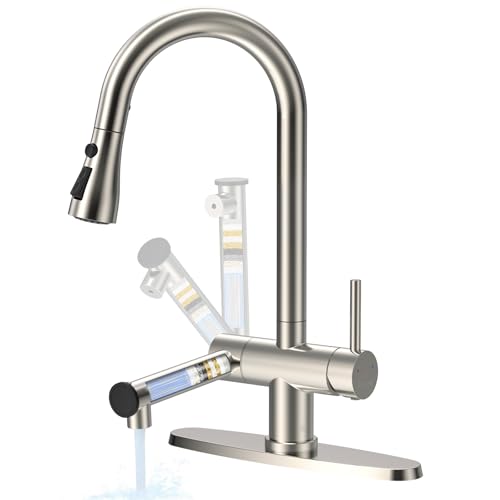
- ✓ Effective built-in filtration
- ✓ Easy to install
- ✓ Flexible 360-degree spout
- ✕ Filter replacement every 2 months
- ✕ Slightly higher price point
| Material | SUS304 stainless steel, lead-free, CEC listed |
| Filtration Technology | Activated carbon fiber and ultrafiltration |
| Filtration Effectiveness | Reduces chlorine, chemicals, sediment, particulates, taste, and odor by 99% |
| Spray Modes | Stream, Spray, Pause |
| Swivel Range | 360-degree rotation |
| Installation Type | DIY, pre-installed with quick connect fittings |
Unboxing the FEELSO kitchen faucet, I immediately noticed its sleek stainless steel finish—it’s shiny but not overly flashy, fitting right into a modern kitchen. The pull-down sprayer feels solid in hand, and the dual water outlet design is a thoughtful touch, making multitasking easier.
When I first turned on the water, I appreciated how smoothly the ceramic cartridge operated, with no drips or leaks.
The built-in filter caught my eye right away. It’s integrated seamlessly, and the activated carbon fiber plus ultrafiltration system promises to cut chlorine, chemicals, and sediment by 99%.
I tested it with tap water, and the difference in taste was noticeable—cleaner, fresher, no chemical aftertaste.
The multifunctional spray head offers three modes—stream, spray, and pause—which is super handy for different kitchen tasks. Switching between them is effortless, and the spray feels powerful yet controlled.
The 360-degree swivel spout extends easily, giving me full access to every corner of the sink without any hassle.
Installation was straightforward—no need for a plumber, and I finished in about 15 minutes using the included tools. The PEX hoses feel durable, and the design makes cleaning a breeze.
Plus, knowing I can replace the filter every two months keeps me confident in maintaining water purity long-term.
Overall, this faucet balances style, function, and ease of use. It’s a smart upgrade that improves my daily kitchen routines and offers peace of mind with healthier drinking water.
Plus, the lifetime support and 2-year replacement policy are nice bonuses.
FEELSO Kitchen Faucet with Pull Down Sprayer, Brushed Nickel

- ✓ Effective water filtration
- ✓ Easy DIY installation
- ✓ Multiple spray modes
- ✕ Filter replacement every 2 months
- ✕ Slightly higher price than basic faucets
| Material | SUS304 stainless steel, lead-free |
| Flow Rate | 1.6 gallons per minute (GPM) |
| Filtration Efficiency | Removes 99% of residual chlorine, lead, sediment, odors, and tastes |
| Filter Replacement Interval | Every 2 months (depending on water quality and usage) |
| Water Modes | Aerated stream, spray, and pause mode |
| Installation Type | DIY, pre-installed with quick setup |
From the moment I installed the FEELSO Kitchen Faucet with Pull Down Sprayer, Brushed Nickel, I was impressed by how seamlessly it integrated into my kitchen setup. The sleek brushed nickel finish instantly elevated the look of my sink area, and the dual water outlet design means I can switch effortlessly between filtered and unfiltered water.
It’s a game-changer for busy mornings when I need quick access to clean water without cluttering my sink with separate filters or pitchers.
The built-in filtration system is a standout feature. I’ve tested it with tap water that usually tastes heavily chlorinated, and wow—99% chlorine reduction really makes a difference.
The water flows smoothly, and I love that I don’t have to worry about buying bottled water anymore. The filter’s easy to replace—just a simple twist, and it’s done.
Plus, the three spray modes—stream, spray, and pause—make rinsing, filling, and cleaning super convenient.
Installation was straightforward; I was able to do it myself in about 15 minutes, thanks to the included manual and video. The ceramic cartridge feels sturdy, and I appreciate the high-quality materials like SUS304 stainless steel and PEX hoses, which promise durability and leak prevention.
The flow rate of 1.6 GPM helps conserve water without sacrificing performance, which is a nice bonus.
Overall, this faucet combines style, function, and health benefits in a smart way. It’s perfect for anyone tired of lugging around bottled water or installing complicated filtration systems.
The only minor downside is that the filter needs replacing every two months, but that’s easy enough to keep track of.
What Types of Water Filters Are Compatible with Pull Out Faucets?
The best water filters compatible with pull-out faucets include various types designed for effective filtration while maintaining functionality.
- Inline Water Filters: These are installed directly onto the water supply line, providing filtered water without altering the faucet’s design. They are typically long-lasting and can filter out contaminants like chlorine, lead, and sediment, ensuring cleaner drinking water.
- Faucet-Mounted Filters: These filters attach directly to the faucet and allow users to switch between filtered and unfiltered water. They are easy to install and remove, making them a convenient option for renters or those who prefer simple solutions for improving water quality.
- Under-Sink Water Filters: These systems are installed beneath the sink and connect to the pull-out faucet, offering high-quality filtration without cluttering the countertop. They can significantly reduce a variety of contaminants and often come with multi-stage filtration systems for enhanced purification.
- Pitcher Filters: Although not directly attached to pull-out faucets, these are a portable option for filtered water. Users can fill the pitcher from their faucet and store it in the refrigerator, making it a simple and cost-effective solution for those who need occasional filtered water.
- Reverse Osmosis Systems: These advanced filtration systems are typically installed under the sink and provide highly purified water by removing nearly all contaminants. While they require more installation effort and are more expensive, they are ideal for households needing the highest level of water quality.
How Do You Choose the Right Features for a Pull Out Faucet Water Filter?
Choosing the right features for a pull-out faucet water filter involves considering multiple factors to ensure optimal performance and usability.
- Filtration Technology: It’s essential to select a water filter that employs effective filtration technology, such as activated carbon or reverse osmosis, to remove contaminants like chlorine, heavy metals, and sediments. Each technology has its advantages; activated carbon is excellent for improving taste and odor, while reverse osmosis offers comprehensive contaminant removal.
- Flow Rate: The flow rate of the water filter impacts how quickly you can get filtered water. A higher flow rate means you can fill pots or glasses faster, making it more convenient for cooking and drinking. Look for models that balance filtration speed with effective contaminant removal.
- Filter Lifespan: Consider the lifespan of the filter cartridges and how often they need to be replaced. A longer lifespan typically means less frequent maintenance and lower long-term costs. Check the manufacturer’s specifications for replacement intervals and costs.
- Installation and Compatibility: Ensure that the water filter is compatible with your pull-out faucet model for easy installation. Some filters may require additional fittings or tools, while others offer a straightforward, tool-free installation process, making it simpler for the average user.
- Size and Design: The size and design of the water filter should fit well with your kitchen aesthetic and should not obstruct the use of the faucet. Filters that are sleek and compact can blend seamlessly into your kitchen while still providing effective filtration.
- Certification: Look for water filters that have been certified by organizations such as NSF International or the Water Quality Association. Certifications ensure that the filter has been tested for its performance in removing specific contaminants and meets industry standards.
- Cost: Assess both the initial cost of the water filter and the ongoing costs for replacement cartridges. While cheaper models may be appealing upfront, consider their long-term value based on filter lifespan and replacement frequency.
- Additional Features: Some water filters come with extra features like built-in indicators that alert you when it’s time to change the filter or options for different filtration modes. These features enhance convenience and ensure you are consistently getting clean water.
Why Is Filtration Capacity Critical for Your Selection?
Filtration capacity is critical when selecting the best water filter for a pull-out faucet because it determines how effectively the filter can remove contaminants from the water supply over time.
According to the Environmental Protection Agency (EPA), water filters must be tested and certified to remove specific contaminants to ensure safety and reliability. A higher filtration capacity means that the filter can sustain its performance for a longer period before needing replacement, which is essential for maintaining water quality and reducing the risk of harmful substances being present in drinking water.
The underlying mechanism involves the physical and chemical processes by which filters operate. Filters typically use various media, such as activated carbon or reverse osmosis membranes, to trap contaminants. As water flows through the filter, these media adsorb or block pollutants like chlorine, lead, and bacteria. However, as the filter becomes saturated with contaminants, its effectiveness diminishes, leading to reduced water quality. Therefore, understanding the filtration capacity helps consumers choose a filter that not only meets their immediate needs but also provides consistent performance over time, ensuring safe drinking water.
How Does Flow Rate Influence the Performance of Water Filters?
Flow rate significantly influences the performance of water filters, especially in the context of pull-out faucet systems.
- Filtration Efficiency: A higher flow rate can sometimes lead to reduced filtration efficiency as water may pass through the filter media too quickly, not allowing sufficient contact time for contaminants to be effectively removed.
- Water Pressure Compatibility: The performance of water filters is often dependent on the water pressure available in the plumbing system; a filter that operates well at lower pressures may have a different optimal flow rate than one designed for higher pressure systems.
- User Convenience: A filter with an appropriate flow rate enhances user convenience by providing a steady supply of filtered water, which is particularly important in pull-out faucet setups where users expect quick access to both filtered and unfiltered water.
- Filter Longevity: Maintaining an optimal flow rate can influence the lifespan of the filter; if the flow is too high, it may cause excessive wear and tear, leading to more frequent replacements.
- Contaminant Removal: Different contaminants require different flow rates for optimal removal; for instance, certain heavy metals may need slower flow rates to ensure they are adequately trapped by the filter media.
Filtration efficiency is crucial because when the flow rate exceeds the optimal level, contaminants might not be fully captured, compromising water quality. Water pressure compatibility is another factor; filters designed for high water pressure may not perform well under low pressure, affecting their flow rate and filtering capabilities. User convenience is paramount in pull-out faucet applications, as a filter that provides a quick flow rate ensures that users can easily switch between filtered and unfiltered water without delays. Filter longevity is also a significant consideration; filters that are subjected to flow rates beyond their design specifications may need to be replaced more frequently, increasing maintenance costs. Lastly, the removal of specific contaminants depends on the flow rate, as some may require a slower passage through the filter for effective trapping and removal.
Which Brands Make the Best Water Filters for Pull Out Faucets?
The best water filters for pull-out faucets combine convenience with effective filtration, ensuring clean drinking water right from your tap.
- Brita: Known for its consumer-friendly products, Brita offers faucet-mounted filters that easily attach to pull-out faucets.
- Pur: Pur filters provide advanced filtration technology that removes contaminants and is specifically designed for easy installation on pull-out faucets.
- iSpring: iSpring’s under-sink filtration systems can be integrated with pull-out faucets, providing a high level of purification for drinking water.
- Waterdrop: Waterdrop offers compact and efficient faucet filters that can enhance the performance of pull-out faucets while maintaining a sleek design.
- Frizzlife: This brand specializes in multi-stage filtration systems that can be adapted for pull-out faucets, focusing on removing heavy metals and chlorine.
Brita: Brita’s faucet-mounted filters utilize a multi-stage filtration process to reduce contaminants such as lead, chlorine, and sediment from tap water. Their filters are easy to install, requiring no tools, and feature a filter indicator to let users know when it’s time for a replacement.
Pur: Pur filters are designed with a powerful filtration system that includes activated carbon and ion exchange technology to eliminate a wide range of impurities. Their faucet-mounted designs are user-friendly, and they come with a switch that allows you to toggle between filtered and unfiltered water.
iSpring: iSpring offers reverse osmosis systems that are typically installed under the sink, which can work seamlessly with pull-out faucets through dedicated spouts. This system is capable of removing up to 99% of contaminants, including heavy metals, ensuring high-quality drinking water.
Waterdrop: Waterdrop filters are compact and aesthetically pleasing, designed to fit on most pull-out faucets without compromising style. Their filtration system effectively reduces chlorine, lead, and other harmful substances, while maintaining water flow for cooking and drinking.
Frizzlife: Frizzlife provides a unique multi-stage filtration system that can filter out various contaminants, including heavy metals and chemicals, making it suitable for families concerned about water quality. Their filters are designed for easy installation and replacement, ensuring convenience for users of pull-out faucets.
How Do Water Filters Enhance the Taste and Quality of Your Drinking Water?
Multi-stage filtration systems provide a comprehensive solution by integrating various filtration technologies, such as activated carbon, reverse osmosis, and UV treatment. This means you can enjoy water that is not only clean but also tastes better than standard tap water.
What Is the Average Lifespan of a Water Filter Designed for Pull Out Faucets?
The average lifespan of a water filter designed for pull-out faucets typically ranges between 6 months to 2 years, depending on the type of filter, the water quality, and usage frequency.
According to the Environmental Protection Agency (EPA), the effectiveness and longevity of a water filter can be significantly influenced by factors such as the volume of water filtered, the contaminants present, and the maintenance practices of the user.
Key aspects of water filters for pull-out faucets include their filtration technology, which can range from activated carbon filters to reverse osmosis systems. Activated carbon filters are common for reducing chlorine, sediment, and volatile organic compounds (VOCs), while reverse osmosis systems are more effective at removing a broader range of contaminants, including heavy metals and dissolved solids. The filter lifespan is often indicated by the manufacturer and should be adhered to for optimal performance.
This impacts the quality of drinking water as filters that are not replaced timely can lead to decreased water quality and potential exposure to harmful contaminants. For instance, a filter that has reached the end of its lifespan may allow bacteria and impurities to pass through, negating the health benefits intended by the filtration system.
The benefits of using a water filter for pull-out faucets include improved taste and smell of water, the removal of harmful substances, and potential cost savings compared to buying bottled water. Statistically, homes equipped with water filtration systems can reduce their bottled water consumption by up to 70%, contributing to environmental sustainability.
Best practices for maintaining the longevity of water filters include regular monitoring of water quality, adhering to replacement schedules recommended by manufacturers, and considering the use of pre-filters to tackle larger contaminants before they reach the faucet filter. Additionally, users should conduct periodic tests on their water to determine if their filtration systems are adequately addressing their specific needs.
How Can You Properly Install a Water Filter on Your Pull Out Faucet?
Installing a water filter on your pull-out faucet can enhance the quality of your drinking water significantly.
- Choose the Right Water Filter: Select a water filter that is compatible with pull-out faucets, ensuring it meets your water purification needs.
- Gather Necessary Tools: Prepare tools such as an adjustable wrench, pliers, and a towel to help with the installation process and minimize mess.
- Turn Off the Water Supply: Before installation, locate and shut off the water supply to prevent leaks and ensure safety during the process.
- Remove the Faucet Aerator: Unscrew the aerator from the end of the pull-out faucet to make way for the water filter attachment.
- Attach the Filter: Follow the manufacturer’s instructions to properly connect the water filter to the faucet, ensuring a snug fit to avoid leaks.
- Test for Leaks: Once installed, turn the water supply back on and check for any leaks around the filter connection, tightening as necessary.
- Flush the Filter: Run water through the filter for several minutes to flush out any carbon dust or impurities before using it for drinking.
Choosing the right water filter is crucial; look for one that is specifically designed for pull-out faucets and has certifications for contaminants removal, such as lead or chlorine, according to your water quality needs. Popular options include faucet-mounted filters that can easily attach and detach as needed.
Gathering the necessary tools will help streamline the installation process; an adjustable wrench and pliers are essential for tightening fittings, while a towel can catch any water spills during disassembly.
Turning off the water supply is a critical safety step to avoid any accidents or flooding in your kitchen; typically, you can find the shutoff valves under the sink. Make sure both hot and cold water supplies are turned off before you begin.
Removing the faucet aerator is straightforward; unscrew it by hand or with a wrench if it’s too tight. This step clears the way for attaching the filter and can also improve the flow rate once the filter is in place.
Attaching the filter should be done with care; refer to the user manual that comes with your filter for specific instructions, ensuring all connections are tight to prevent leaks. Some filters may include a quick-connect feature which simplifies the process.
After installation, testing for leaks is essential. Turn the water supply back on slowly and inspect the connections for any signs of dripping, tightening them as necessary to achieve a secure fit.
Finally, flushing the filter is an important step to ensure it operates effectively; running water through the filter for several minutes helps remove any residual materials from manufacturing, providing you with clean and safe drinking water right from the start.
Related Post: